If you are asking, “what vaccinations do I need for Thailand?”, the practical answer is that most UK travellers should have their routine vaccines checked and should discuss hepatitis A and tetanus protection. Typhoid, hepatitis B, rabies and Japanese encephalitis may also be relevant depending on where you are going, how long you are staying and what you plan to do.
There is no single list of Thailand travel vaccines that applies to every visitor. A short Bangkok and beach holiday is assessed differently from a month of backpacking, a rural homestay, jungle trekking, healthcare work or repeated travel close to land borders. Your age, medical history, pregnancy status and previous vaccination record also affect the recommendation.
Travellers arriving directly from the UK do not normally need to show a routine travel-vaccination certificate. Thailand can, however, require a yellow fever certificate when a traveller aged nine months or over arrives from a country with a risk of yellow fever transmission, or has spent more than 12 hours in transit through an airport in such a country.
Start planning around six to eight weeks before departure where possible. The NHS advises seeking travel-health advice at least four to six weeks before travel, and FCDO Thailand guidance advises checking current recommendations at least eight weeks before the trip. Last-minute advice is still worthwhile if your departure date is closer.
TravelJabs4U can help you find a travel clinic near you, review the travel vaccination price guide and arrange a consultation based on your complete Thailand itinerary.
Thailand travel vaccinations at a glance
This checklist separates border-entry rules from vaccines recommended for health protection. It is a planning guide and does not replace an individual travel-risk assessment.
Entry certificate that may apply
· Yellow fever certificate – Thailand has no yellow fever risk, so the vaccine is not normally advised for protection against disease in Thailand. A certificate may be required because of your route through a yellow-fever-risk country.
Routine vaccines to review
· UK routine vaccines – Make sure your normal vaccination schedule is complete, including MMR and diphtheria-tetanus-polio protection. A clinician can check whether a travel booster is appropriate.
Vaccines recommended for most travellers
· Hepatitis A – Recommended for previously unvaccinated travellers because infection can spread through contaminated food and water.
· Tetanus – Travellers should have completed the UK course. A booster may be advised when the last dose was more than ten years ago and medical facilities may be limited.
Vaccines that may be recommended for some travellers
· Typhoid – May be considered for visiting friends and relatives, longer or frequent trips, local living, uncertain food hygiene or travel outside standard tourist settings.
· Hepatitis B – May be considered for longer stays, healthcare or humanitarian work, medical treatment, tattoos or piercings, sexual exposure and other contact with blood or body fluids.
· Rabies – May be advised for long stays, animal contact, cycling or running, remote travel, children and routes where prompt post-exposure treatment may be difficult to obtain.
· Japanese encephalitis – May be considered for longer rural stays, repeated travel, uncertain itineraries, rice-growing or pig-farming areas and higher mosquito exposure.
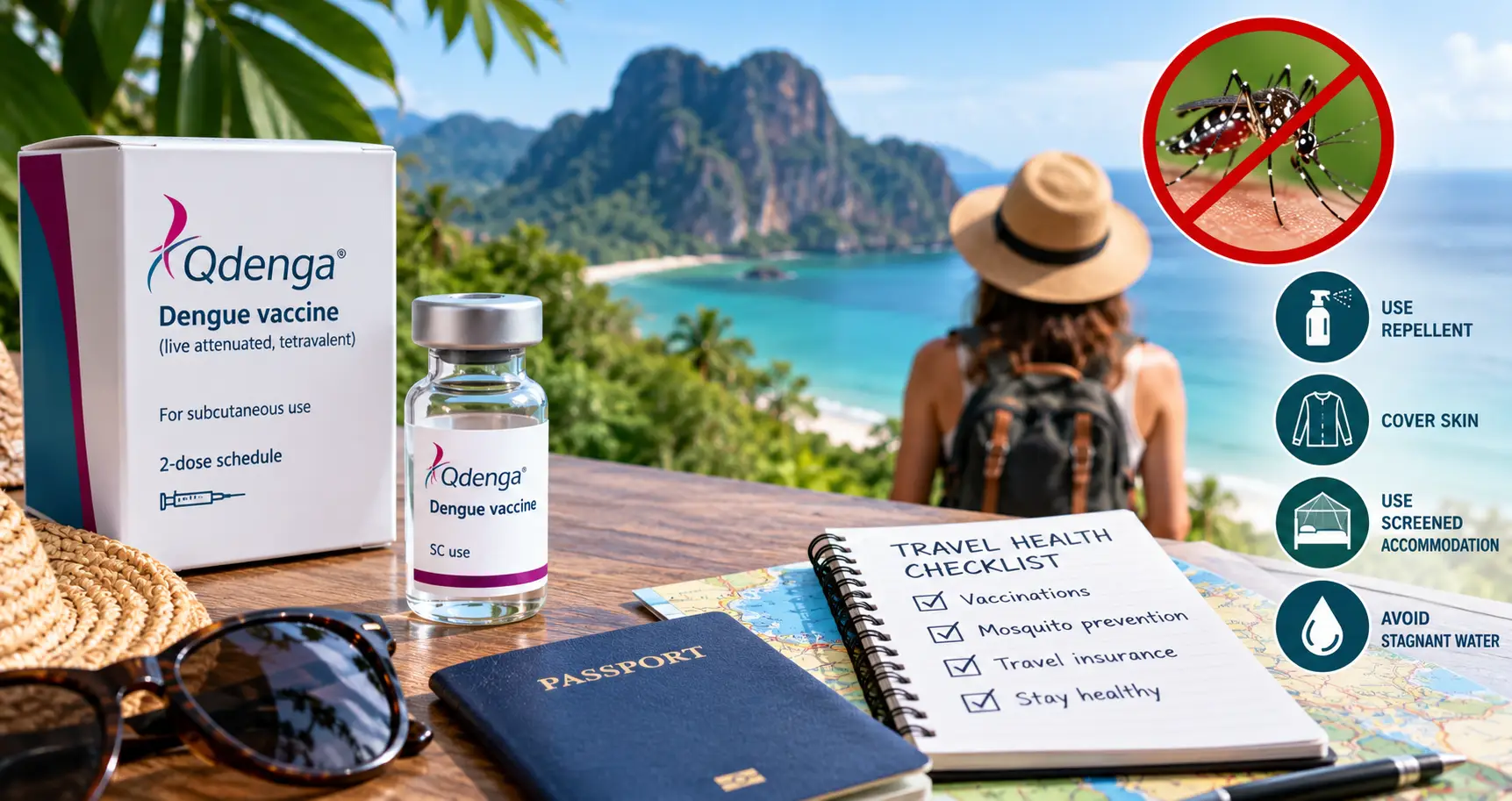
· Other vaccines – Cholera, tuberculosis, dengue or chikungunya vaccination may be relevant only for selected travellers after a detailed assessment.
Malaria and mosquito protection
· Malaria tablets are not routinely needed for every Thailand holiday. Current risk is concentrated in rural forested border areas, while several major cities and islands are listed as having no malaria risk.
· Mosquito-bite prevention remains important throughout Thailand because dengue, chikungunya, Japanese encephalitis and other infections can occur even where malaria tablets are not advised.
What vaccinations do I need for Thailand from the UK?
For most travellers from the UK, the starting point is a check of routine vaccinations plus a discussion about hepatitis A and tetanus. The answer then becomes more individual. Typhoid may be considered when food and water exposure is likely to be higher; rabies becomes more relevant with animal contact or limited access to urgent treatment; and Japanese encephalitis is mainly linked with rural, longer or higher-exposure itineraries.
A clinician will normally ask for every destination within Thailand, any onward travel to neighbouring countries, the length of each stay, the type of accommodation, planned activities, likely animal exposure, previous vaccinations and relevant medical conditions. A vague answer such as “Thailand for two weeks” may not be enough if the trip includes a city stay, an island, a forest trek and a land-border crossing.
Your routine record matters because travel does not replace the normal UK immunisation schedule. Make sure MMR is complete and bring evidence of previous travel vaccines where available. You can check records through the NHS App or ask your GP surgery if you are unsure what you have received.
Are any vaccinations required to enter Thailand?
For a traveller flying directly from the UK, Thailand does not usually require proof of hepatitis A, typhoid, tetanus, hepatitis B, rabies or Japanese encephalitis vaccination at the border. These vaccines are considered for personal health protection rather than as standard entry documents.
Yellow fever certificate requirements for Thailand
Thailand has no yellow fever transmission risk. Nevertheless, under current international certificate rules, travellers aged nine months and over may need a valid yellow fever vaccination certificate if they arrive from a country with a risk of yellow fever transmission. The requirement also applies when the traveller has transited for more than 12 hours through an airport in a yellow-fever-risk country.
This is most relevant to multi-country journeys involving parts of Africa or South America. A direct UK-Thailand journey without qualifying travel or transit through a yellow-fever-risk country would not normally trigger the certificate rule. Because entry rules can change, check the full route rather than Thailand alone.
Travellers whose route may trigger the rule can review the yellow fever vaccine cost and certified clinic guide. Yellow fever vaccination must be provided by a designated centre, and a first certificate does not become valid immediately.
Vaccines recommended for most travellers to Thailand
Current UK country guidance places hepatitis A and tetanus in the group recommended for most travellers to Thailand. “Recommended for most” does not mean every person automatically receives a new dose. Previous vaccination, age, medical suitability and the planned journey must still be reviewed.
Hepatitis A vaccine for Thailand
Hepatitis A is transmitted through contaminated food and water or direct contact with an infectious person. TravelHealthPro recommends hepatitis A vaccination for all previously unvaccinated travellers to Thailand because the vaccine is generally well tolerated and provides long-lasting protection.
Risk is not limited to adventurous travel. Infection can occur during city breaks, resort holidays, family visits and organised tours because it is not always possible to see whether food, water, ice or food-handling practices are safe. Careful hygiene remains important after vaccination.
The schedule depends on age, previous doses and whether a combined vaccine is selected. Review the hepatitis A vaccine cost and appointment guide for current pricing and booking information.
Tetanus protection and the DTP booster
Tetanus bacteria occur worldwide and can enter through puncture wounds, burns, scratches, road injuries and wounds contaminated with soil. Travellers should have completed the UK tetanus vaccination course and should clean wounds carefully and seek medical assessment for significant injuries.
TravelHealthPro advises a tetanus-containing booster when the last dose was more than ten years ago and the traveller is going somewhere medical facilities may be limited, even if five previous doses have been given. In the UK, the travel booster is normally combined with diphtheria and polio rather than supplied as a tetanus-only injection.
Read the diphtheria, tetanus and polio vaccine guide for booking information, or see how long the tetanus vaccine lasts for a fuller explanation of routine and travel booster timing.
Vaccines that may be recommended for some Thailand travellers
The following injections for Thailand are not required for every short holiday. Their value depends on factors such as local living, duration, season, rural exposure, animal contact, occupation and access to prompt medical treatment.
Typhoid vaccine for Thailand
Typhoid is spread through contaminated food and water. In Thailand, vaccination can be considered for travellers whose activities place them at increased risk. This includes people visiting friends and relatives, frequent or long-stay travellers and those likely to encounter unreliable sanitation or food hygiene.
A short resort stay with reliable food and water may carry a lower risk than a backpacking route, a village homestay or a long family visit. Oral and injectable typhoid vaccines are available, but neither is completely effective, so food, water and hand-hygiene precautions remain necessary.
Review the typhoid vaccine cost and booking guide, learn how long the typhoid vaccine lasts and read about common typhoid vaccine side effects before your consultation.
Hepatitis B vaccine for Thailand
Hepatitis B spreads through infected blood and body fluids. Vaccination may be considered for travellers who could have unprotected sex, undergo medical or dental treatment, receive tattoos or piercings, work in healthcare or humanitarian settings, play contact sports or stay for a long period.
The need is not determined by the country name alone. A short organised trip may create little additional exposure, while longer stays, repeated visits or activities involving healthcare, blood or body fluids can change the recommendation. Bring details of any previous hepatitis B course because a completed schedule may already provide protection.
See the hepatitis B vaccine cost and appointment guide for current TravelJabs4U information.
Rabies vaccine for Thailand
Rabies is a risk in Thailand and has been reported in domestic animals. Dogs are an important source, but cats, monkeys, bats and other mammals can also expose travellers through bites, scratches or saliva contacting broken skin, the eyes or the mouth. Children can be at increased risk because they may approach animals or fail to report minor contact.
Pre-exposure rabies vaccination is recommended for some travellers, including people working with animals, those travelling where prompt post-exposure treatment may be difficult to obtain, people planning higher-risk activities such as cycling or running, and long-stay travellers of more than one month.
Vaccination does not remove the need for urgent care after exposure. Wash the wound thoroughly with soap and running water, apply a suitable antiseptic if available and obtain urgent local medical assessment even when the mark appears minor. Post-exposure treatment is still required, although prior vaccination can simplify it.
Review the rabies vaccine cost, doses and clinic guide before deciding whether pre-travel vaccination fits your itinerary.
Japanese encephalitis vaccine for Thailand
Japanese encephalitis is transmitted by mosquitoes that usually bite between dusk and dawn, especially in rural areas with rice fields, marshes and pig farming. The infection occurs countrywide in Thailand. Risk is present year-round, with seasonal peaks from May to October, particularly in northern regions including the Chiang Mai Valley.
Short trips limited to urban areas are generally lower risk. Vaccination can be considered for travellers staying in an affected area for one month or more during the transmission season, frequent travellers, people with uncertain plans and those whose work or activities increase exposure. It may also be considered for a shorter trip involving rice fields, pig farms or substantial rural evening and night-time exposure.
Vaccination is only one part of prevention. Use insect repellent, cover exposed skin where practical and choose accommodation with effective screens or air conditioning, especially between dusk and dawn.
See the Japanese encephalitis vaccine cost and clinic guide for schedule, price and booking information.
Other vaccines that may be discussed
Some travellers need a broader assessment. BCG vaccination may be considered for certain unvaccinated children under 16 who will live in Thailand for more than three months, or for selected occupational exposure. Cholera vaccination is generally reserved for particular higher-risk circumstances rather than routine resort travel.
Thailand also has risks from dengue and chikungunya. Mosquito-bite avoidance is important for everyone. Vaccines against these infections are not simple routine additions for every traveller and require an individual assessment of age, previous infection, medical suitability, outbreak conditions, length of stay and likely exposure.
Thailand travel vaccines by itinerary
The question “what jabs do I need for Thailand?” becomes easier to answer when the trip is divided into locations and activities. The examples below are not prescriptions, but they show why two travellers on the same flight may receive different advice.
Bangkok, Pattaya and short city stays
· Review routine vaccinations, hepatitis A and tetanus.
· Typhoid may be considered if local food and water exposure is expected to be higher, especially during longer stays or family visits.
· Bangkok and Pattaya are listed as having no malaria risk, but mosquito protection is still needed for dengue and other insect-borne infections.
· Rabies advice remains relevant because animal contact can occur in urban and tourist areas as well as rural locations.
Phuket, Krabi and resort or island holidays
· Routine vaccines, hepatitis A and tetanus remain the starting point.
· A standard resort itinerary usually produces a different risk assessment from remote island travel, local living, extensive outdoor activity or onward travel near land borders.
· Koh Samui and Koh Phangan are specifically listed as having no malaria risk. Other islands and coastal routes should be checked individually because malaria advice is location-specific.
· Use mosquito repellent even when malaria tablets are not advised because dengue and chikungunya occur in Thailand.
Chiang Mai, Chiang Rai and northern Thailand
· Chiang Mai and Chiang Rai cities are listed as having no malaria risk, but rural excursions and onward travel may change the assessment.
· Japanese encephalitis risk is particularly relevant to rural northern exposure, especially from May to October and around rice-growing or pig-farming areas.
· Trekking, cycling, animal contact and limited access to medical care can increase the relevance of rabies and other travel-health precautions.
Rural villages, forest trekking and land-border travel
· Review typhoid, rabies and Japanese encephalitis according to the route, duration and activities.
· Low malaria risk is concentrated in rural forested border areas with Cambodia, Laos and Myanmar. Advice should use the exact district rather than a general statement about “northern Thailand” or “the islands”.
· Consider whether rapid medical treatment would be available after a bite, injury, fever or other illness.
Long stays, backpacking and visiting friends or relatives
· Longer duration increases the opportunity for food, water, mosquito and animal exposure.
· Local homes, repeated trips, rural travel and flexible itineraries may make typhoid, hepatitis B, rabies and Japanese encephalitis more relevant.
· Travellers who know Thailand well can still underestimate risk. A consultation should cover the current trip rather than relying on what was advised years ago.
Do I need malaria tablets for Thailand?
Most people following a standard tourist itinerary in Thailand do not need malaria tablets, but the answer depends on the exact route and personal risk. Current TravelHealthPro guidance lists low malaria risk in rural forested border areas with Cambodia, Laos and Myanmar. Awareness of risk and careful bite avoidance are recommended in these areas.
The remaining areas of Thailand are classed as very low risk, including Kanchanaburi. Bangkok, Chiang Mai, Chiang Rai, Koh Phangan, Koh Samui and Pattaya are specifically listed as having no malaria risk. This does not mean mosquito precautions can be ignored, because dengue, chikungunya and Japanese encephalitis can still occur.
In low-risk areas, malaria tablets may be considered only in exceptional circumstances for travellers with a higher chance of exposure or severe complications. Examples include some long-term visitors, people visiting friends and relatives, pregnant travellers, infants, young children, older travellers, people without a functioning spleen and those with complex health conditions. The final decision should follow an individual assessment.
If tablets are advised, the choice depends on the area, resistance patterns, age, pregnancy status, medical history, other medicines and journey length. Mefloquine resistance is reported in Thailand; current UK guidance identifies atovaquone/proguanil or doxycycline as possible options for selected special-risk travellers in low-risk areas. Do not choose a medicine solely on price.
Seek urgent medical advice for a fever of 38°C or higher after time in a malaria-risk area, or for symptoms suggestive of malaria within a year of return. Tell the clinician exactly where you travelled, even if symptoms begin months later.
Review the malaria tablets price and treatment guide. For a route-by-route explanation, see our malaria risk in Thailand by region guide when it is published.
Mosquito protection in cities, islands and rural areas
Mosquito precautions matter across Thailand, including places with no malaria risk. Dengue and chikungunya mosquitoes mainly bite during the day, while malaria and Japanese encephalitis vectors are more active from dusk to dawn. Protection should therefore continue throughout the day and evening.
· Apply an effective insect repellent to exposed skin and reapply it according to the product instructions.
· Wear loose, long sleeves and long trousers when practical, particularly around dawn, dusk and rural outdoor activities.
· Choose accommodation with air conditioning, intact window screens or a suitable mosquito net where needed.
· Remove or avoid standing water around accommodation because it can support mosquito breeding.
· Seek medical advice for fever, severe headache, rash, unusual bleeding, persistent vomiting or significant illness during or after travel.
Food and water precautions in Thailand
Hepatitis A and typhoid vaccination reduce risk but do not replace careful food and water choices. Travellers should wash or sanitise hands before eating, drink safely prepared water and be cautious with food that has been left standing, served lukewarm or handled in poor hygienic conditions.
Street food is not automatically unsafe, and hotel food is not automatically risk-free. Choose busy vendors where food is cooked thoroughly and served hot, avoid raw or undercooked shellfish, peel fruit yourself where practical and check whether ice and drinking water come from a reliable source.
A separate food and water safety in Thailand guide will provide a practical checklist for eating locally, managing travellers’ diarrhoea and deciding when to seek medical help.
Animal bites and rabies precautions in Thailand
Do not touch, feed or pose for photographs with dogs, cats, monkeys or other mammals, even when an animal appears healthy or is used to tourists. Avoid carrying food openly near monkeys and supervise children closely around animals.
After a bite, scratch or saliva exposure, wash the area immediately and thoroughly. Seek urgent medical assessment locally rather than waiting until you return to the UK. The treatment needed depends on the type of contact, vaccination history and whether rabies immunoglobulin is required and available.
Keep photographs of your rabies vaccination record accessible while travelling. Pre-exposure vaccination can simplify post-exposure treatment, but it never means an exposure can be ignored.
When should I book Thailand travel vaccinations?
Begin planning six to eight weeks before departure when possible. This allows time to check records, complete vaccines that need more than one dose and discuss malaria, mosquito, food, water and animal-bite prevention. People with complex medical conditions, pregnancy, immune suppression or a long multi-country route should seek advice earlier.
Do not assume it is too late if travel is close. Some vaccines can still be useful at short notice, and a consultation can identify practical precautions, certificate issues and medicines that may be relevant. The assessment should use your exact departure date because vaccine schedules and certificate validity can depend on timing.
Use our future Thailand travel health checklist to organise your route, accommodation details, activities, vaccine record, medicines and questions before the appointment.
How much do Thailand travel vaccinations cost in the UK?
The total cost depends on which vaccines are clinically appropriate, how many doses are required, whether you already have valid protection and whether a combined vaccine is suitable. There is no responsible single “Thailand vaccine package” that every traveller should buy.
After a risk assessment, hepatitis A, typhoid, cholera and polio-containing travel vaccines may be available free through the NHS where clinically indicated and where the GP service provides travel vaccination. Hepatitis B, Japanese encephalitis and rabies are not routinely available free for travel and are usually paid for privately.
Private prices can vary by clinic, product, dose and consultation arrangement. Check whether the displayed figure is per dose or for a complete course, and confirm whether the consultation or vaccination record is included. Price should not replace medical suitability or correct timing.
Review the current TravelJabs4U travel vaccination price guide and then find a participating clinic for an individual assessment.
How to prepare for a Thailand travel-health appointment
1. Write down every destination, province, island and land-border crossing, including onward travel outside Thailand.
2. Record departure and return dates, plus the number of nights in each location.
3. Bring your NHS and private vaccination records where available.
4. Describe accommodation, food plans, trekking, cycling, diving, volunteering, animal contact and healthcare work.
5. List medical conditions, allergies, pregnancy or breastfeeding, and every prescribed, non-prescription and herbal medicine.
6. Mention previous serious vaccine reactions and any weakened immune system.
7. Ask which advice is for border entry, which is for health protection and which precautions remain necessary after vaccination.
How to book Thailand travel vaccinations with TravelJabs4U
TravelJabs4U helps UK travellers locate participating travel clinics and review current vaccine-price information. The appointment should assess the whole route rather than selecting vaccines from a generic destination list.
Bring your itinerary and vaccination record. The healthcare professional can review routine protection, likely food and water exposure, animal contact, Japanese encephalitis risk, malaria areas and any yellow fever certificate requirement created by your route.
Use the TravelJabs4U directory to find a travel clinic near you, or explore vaccinations by destination if Thailand is part of a longer multi-country journey.
Conclusion
So, what vaccinations do I need for Thailand? Most UK travellers should review routine vaccines and discuss hepatitis A and tetanus. Typhoid, hepatitis B, rabies and Japanese encephalitis may be advised when the route, duration, activities or access to medical care increase risk.
Travellers flying directly from the UK do not normally need a standard vaccine certificate, but a yellow fever certificate can be required when the journey includes a yellow-fever-risk country or a qualifying airport transit. Malaria tablets are not routinely needed for most standard tourist routes, although rural forested border areas require careful assessment and mosquito precautions.
Arrange a consultation early, bring your full itinerary and vaccination record, and continue food, water, mosquito and animal-bite precautions even after vaccination. Travel vaccines reduce selected risks; they do not remove every health hazard associated with the trip.
Author & review line (display on page)
Written by the TravelJabs4U Editorial Team. Medically reviewed by Mohammed Shajan Ali, MPharm, GPhC-registered pharmacist (GPhC No. 2067785). Last reviewed: July 2026.
FAQs
What vaccinations do I need for Thailand from the UK?
Most travellers should make sure routine vaccines are up to date and should discuss hepatitis A and tetanus. Typhoid, hepatitis B, rabies and Japanese encephalitis may be considered according to the exact route, length of stay, activities, accommodation, animal contact and medical history.
Are any vaccinations required to enter Thailand?
Travellers arriving directly from the UK do not usually need to show routine travel-vaccination certificates. A yellow fever certificate may be required for travellers aged nine months or over arriving from a yellow-fever-risk country or after more than 12 hours of airport transit in such a country.
Do I need a hepatitis A vaccine for Thailand?
TravelHealthPro recommends hepatitis A vaccination for all previously unvaccinated travellers to Thailand. The infection can spread through contaminated food and water, and careful hygiene remains necessary after vaccination.
Do I need a typhoid vaccine for Thailand?
Typhoid vaccination can be considered for travellers at increased food-and-water risk, including people visiting friends and relatives, frequent or long-stay travellers and those likely to encounter poor sanitation or unreliable food hygiene.
Should I have a rabies vaccine before Thailand?
Pre-exposure rabies vaccination may be advised for long stays, animal-related work, cycling or running, remote travel, children and journeys where prompt post-exposure treatment may be difficult to obtain. Urgent treatment is still needed after any possible exposure.
Do I need Japanese encephalitis vaccination for Thailand?
It may be considered for a stay of one month or more in affected areas during the transmission season, repeated travel, uncertain itineraries or shorter trips involving rice fields, pig farms or substantial rural exposure. Risk occurs countrywide and peaks from May to October, especially in northern regions.
Do I need malaria tablets for Thailand?
Most standard tourist itineraries do not require malaria tablets. Low risk is concentrated in rural forested border areas with Cambodia, Laos and Myanmar. Bangkok, Chiang Mai, Chiang Rai, Koh Phangan, Koh Samui and Pattaya are listed as having no malaria risk, but bite prevention is still important.
What jabs do I need for Bangkok and Thailand’s islands?
Routine vaccines, hepatitis A and tetanus are the usual starting point. Other vaccines depend on trip length, food and water exposure, rural excursions, animal contact and onward travel. Koh Samui and Koh Phangan are listed as having no malaria risk, while other routes should be checked individually.
When should I arrange Thailand travel vaccines?
Start six to eight weeks before departure where possible. The NHS advises seeking travel-health advice at least four to six weeks before travel, and FCDO Thailand guidance recommends checking current health advice at least eight weeks before the trip. Last-minute advice can still help.
How much do vaccinations for Thailand cost?
The total depends on the vaccines and number of doses advised. Some vaccines may be available free through the NHS after assessment, while hepatitis B, Japanese encephalitis and rabies are normally private. Check current per-dose prices and complete an individual risk assessment.
Disclaimer
This page provides general travel-health information for UK travellers and is not a substitute for an individual medical consultation. Vaccine recommendations, entry requirements, malaria advice and outbreak information can change. Check current TravelHealthPro and FCDO guidance and obtain advice based on your complete itinerary, medical history, pregnancy status, medicines and vaccination record. Seek urgent medical help after a possible rabies exposure or for significant illness during or after travel.