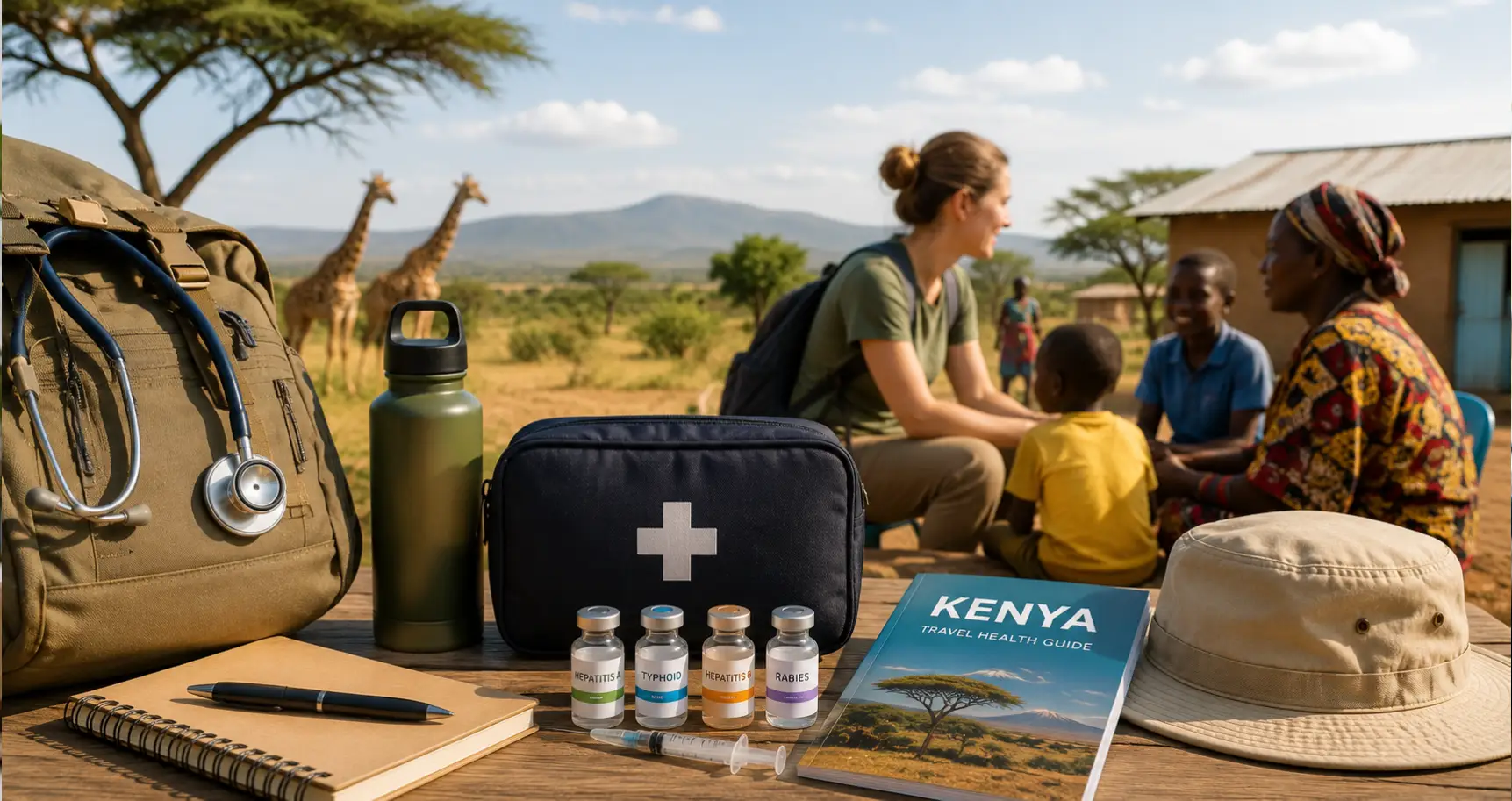
For many trips to Kenya, malaria tablets are recommended. Current UK guidance classifies Kenya as a high-risk malaria destination overall, but the city of Nairobi and highlands above 2,500 metres are classed as very low risk. Whether you personally need antimalarial tablets depends on exactly where you will stay, your route, the length and style of your trip, and your health history.
If your itinerary includes safari areas, coastal or rural travel, or overnight stays outside the very-low-risk areas, arrange a travel-health assessment before you go. A clinician or pharmacist can check the latest malaria map and decide whether atovaquone/proguanil, doxycycline or mefloquine is appropriate for you. Even when tablets are advised, mosquito-bite prevention is still essential.
Is there a malaria risk in Kenya?
Yes. TravelHealthPro and the 2026 UK malaria prevention guidance classify Kenya as high risk for malaria, with two important exceptions: Nairobi and highland areas above 2,500 metres are described as very low risk. In those very-low-risk areas, awareness of malaria and careful bite prevention are generally advised rather than routine chemoprophylaxis.
The country-wide label is therefore only a starting point. Two travellers on the same flight to Kenya may receive different advice if one stays only in Nairobi while the other goes on safari, visits the coast or travels through lower-altitude rural areas.
Which Kenya itineraries are more likely to need malaria tablets?
Malaria advice is based on the exact itinerary, not simply the word “Kenya” on a booking confirmation. Risk assessment should consider every overnight stop and side trip, as well as altitude, season, accommodation and access to medical care.
- Safari trips and travel through lower-altitude areas outside Nairobi may involve high-risk malaria zones.
- Coastal, rural or remote stays may carry different malaria considerations from a Nairobi-only itinerary.
- Highland travel above 2,500 metres is classed as very low risk for malaria, although other travel-health risks can still apply.
- Long stays, basic accommodation, evening outdoor activity and travel far from medical care can change the overall risk assessment.
- Pregnancy, young age, older age, immune suppression and absence of a functioning spleen can increase the consequences of malaria and may require more individualised advice.
Which malaria tablets may be considered for Kenya?
For high-risk areas of Kenya, current UK guidance lists atovaquone/proguanil, doxycycline or mefloquine as recommended chemoprophylaxis options. They are not interchangeable for every traveller. The choice depends on your medical history, current medicines, pregnancy or breastfeeding status, age and weight, previous side effects, trip duration and how practical the dosing schedule is for you.
Atovaquone/proguanil
Atovaquone/proguanil is taken daily. UK guidance normally starts it one to two days before entering a malaria-risk area, continues it every day during exposure and for seven days after leaving the risk area. Suitability still needs to be checked, including kidney function, pregnancy or breastfeeding considerations and possible medicine interactions.
Doxycycline
Doxycycline is also taken daily and is normally started one to two days before entering the malaria-risk area. It continues throughout exposure and for four weeks after leaving. It is not suitable for children under 12 years under current UK guidance and is generally avoided for malaria prevention during pregnancy. It can also cause stomach or oesophageal irritation and increased sensitivity to sunlight.
Mefloquine
Mefloquine is taken weekly and is usually started two to three weeks before entering a malaria-risk area, which allows time to assess tolerability before departure. It continues during exposure and for four weeks afterwards. Careful screening is essential because it is unsuitable for people with specified psychiatric disorders, epilepsy or convulsions and has other important cautions.
Do not choose an antimalarial only because it is cheaper, familiar or easier to obtain. The safest option is the one that is appropriate for both your itinerary and your individual health circumstances.
How early should I arrange antimalarials for Kenya?
Start planning early enough for your route and medicine choice to be assessed. The FCDO advises checking Kenya vaccine and travel-health recommendations at least eight weeks before travel. Some antimalarials can be started close to departure, but mefloquine is normally started two to three weeks before entering a malaria-risk area. Earlier advice also gives time to review side effects, medicine interactions and any vaccines you may need for the same trip.
If you are travelling at short notice, still seek advice. A late appointment is usually more useful than travelling without an assessment, but do not assume that every medicine can be started on the same timetable.
Do I still need mosquito protection if I take malaria tablets?
Yes. No antimalarial regimen provides complete protection. UK guidance uses an ABCD approach: awareness of risk, bite prevention, chemoprophylaxis when appropriate, and prompt diagnosis and treatment if symptoms develop.
- Use an effective insect repellent on exposed skin and follow the product instructions. UKMEAG recommends a 50% DEET-based repellent where available.
- Wear loose long sleeves and long trousers when practical, especially from dusk to dawn when malaria-transmitting mosquitoes are most active.
- Use accommodation with effective screening or air conditioning where possible.
- Use an insecticide-treated mosquito net when sleeping areas are not adequately screened.
- Keep bite precautions in place even if tablets have been prescribed, because tablets do not prevent every mosquito-borne infection.
What if I am only staying in Nairobi?
Current UK guidance describes malaria risk in Nairobi as very low. For a genuinely Nairobi-only itinerary, routine malaria tablets are not normally the default recommendation in the same way as they are for high-risk areas, but bite avoidance and awareness of symptoms remain important.
Tell the travel-health professional about any day trips, safari extensions, coastal stays or overnight travel outside Nairobi. A plan that looks Nairobi-only at first can become a different risk assessment once the full route is included.
What if I am climbing Mount Kenya or staying at high altitude?
Highlands above 2,500 metres are classed as very low risk for malaria, but altitude creates its own health considerations. Do not use the altitude of one part of your trip to assume that all of your Kenya itinerary is low risk. Journeys to and from the highlands may pass through lower-altitude malaria-risk areas, so the whole route needs to be reviewed.
When should I seek medical help for possible malaria?
Malaria can become serious quickly. Seek medical advice promptly if you develop fever or other symptoms that could be malaria while travelling. After you return, urgent assessment is also important if you develop possible malaria symptoms within 12 months of visiting a malaria-risk area. Tell the healthcare professional exactly where and when you travelled, even if you took antimalarial tablets correctly.
Taking prevention tablets reduces risk but does not rule malaria out. Do not delay seeking care because you completed a course.
Plan your Kenya malaria assessment
Before a consultation, write down your full Kenya itinerary, including overnight stops, safari parks, coastal areas, altitude, transit countries and travel dates. Also have details of your medical conditions, regular medicines, allergies, pregnancy or breastfeeding status, and any previous problems with antimalarial medicines.
For broader vaccination and destination advice, read the Kenya travel vaccinations guide. For information about malaria medicine access and costs, see the TravelJabs4U malaria pills page. TravelJabs4U can also help you find a participating travel clinic for an individual assessment.
Frequently asked questions
Do I need malaria tablets for Kenya?
Many Kenya itineraries do. Current UK guidance classifies Kenya as high risk overall, while Nairobi and highlands above 2,500 metres are very low risk. The final recommendation depends on your exact route and personal health factors.
Which parts of Kenya have malaria risk?
Most of Kenya is treated as high risk in current UK guidance. Nairobi and highlands above 2,500 metres are the main very-low-risk exceptions. Use a current malaria map and itinerary-based assessment rather than relying on a general country label.
How early should I arrange antimalarials?
Arrange travel-health advice as early as practical. Atovaquone/proguanil and doxycycline are normally started one to two days before entering a malaria-risk area, while mefloquine is usually started two to three weeks beforehand. The correct timing depends on the medicine actually recommended for you.
Do I still need mosquito protection if I take malaria tablets?
Yes. No malaria tablet is 100% effective. Use bite-prevention measures throughout the risk period and seek prompt medical advice if possible malaria symptoms develop during travel or after you return.
Disclaimer
This page provides general travel-health information and is not an individual malaria risk assessment or prescribing decision. Malaria recommendations can change and depend on the exact route, altitude, season, trip duration, age and weight, pregnancy or breastfeeding, medical history, current medicines and other personal factors. A booking or consultation does not guarantee that a particular antimalarial will be suitable, prescribed, supplied or available. Seek urgent medical advice for possible malaria symptoms during travel or within 12 months of returning from a malaria-risk area.