If you are searching for a dengue vaccine booster in the UK, the most important distinction is this: the second Qdenga dose at three months is part of the standard primary course, not a later booster. Current UK product information and guidance do not establish the need for, or timing of, a routine reinforcing dose after that two-dose course. Whether dengue vaccination is relevant to you in the first place depends on your previous dengue history, destination and individual risk assessment. For the wider eligibility and service information, see the dengue fever vaccine in the UK page.
The second Qdenga dose is not the same as a later booster
Qdenga is given as two doses: the first dose at month 0 and the second dose three months later. Those two doses make up the licensed primary schedule. Calling dose 2 a “booster” can be misleading because it may suggest that the first dose completed the course and the second is an optional top-up. That is not how the current schedule is described.
A later booster, sometimes called a reinforcing or third dose, would be an additional dose after the primary course. Current UK guidance says there are no data establishing whether such a dose is needed or when it should be given. The Qdenga product information likewise states that the need for a booster dose has not been established.
How long can protection from Qdenga last?
There is no single number that can be used as a personal “expiry date” for dengue vaccine protection. Clinical studies have followed Qdenga protection for several years after the primary course, including analyses extending to around four and a half years after the second dose. That is useful evidence about durability, but it does not create a rule that everyone should receive another dose at a particular year.
Protection can also vary between people and circumstances. Your previous dengue exposure, age, destination, intensity and duration of exposure, and the evidence available when you next travel can all affect the clinical discussion. Guidance may change as longer-term data become available, so an old vaccination date should not be used on its own to decide that you do or do not need another dose.
Do you need a dengue booster before your next trip?
There is currently no routine UK schedule that says travellers should receive a Qdenga booster every few years. If you completed a two-dose course and are planning another trip to an area where dengue is a risk, the sensible next step is to have your history and itinerary reviewed rather than automatically booking an extra dose.
Check the dengue risk for the places you are actually visiting using the travel vaccinations by destination pages, then discuss any previous dengue infection and vaccination record with a travel-health professional. Current UK guidance mainly considers Qdenga for selected people who have had dengue in the past and are travelling to areas with dengue risk or an ongoing outbreak. Exceptional use without previous dengue needs further expert advice.
What can change the advice?
A future assessment is more useful than applying a fixed booster interval because dengue risk is not determined by the vaccine date alone. A clinician may consider:
- where you are travelling and whether dengue is currently a risk or outbreak concern;
- how long you will be away and the type of accommodation and activities planned;
- whether you have reliable evidence of previous dengue infection;
- whether you completed the two-dose Qdenga course and when each dose was given;
- any important changes in your health, medicines, pregnancy or breastfeeding status, or immune function; and
- any updated UK guidance or product information available at the time of travel.
These factors do not mean that an extra dose will be recommended. They explain why booster decisions should be made from current evidence and an individual assessment rather than a general timetable.
Can you have a dengue booster early?
Do not add an extra Qdenga dose or bring one forward simply because you are travelling soon. Current product information gives the primary schedule as two doses three months apart and does not provide a routine later-booster schedule. If you are part-way through the primary course, the issue is completion of that course, not an early booster.
If your concern is how soon to start or complete the standard course before departure, use the separate guide to Qdenga before travel. It covers the three-month interval between the primary doses and travel-planning questions without changing the later-booster guidance on this page.
What if you do not know when your last dengue vaccine dose was?
Try to find your vaccination record before making assumptions. Useful evidence may include a vaccination card, a record from a GP or pharmacy, a travel-clinic printout, an app record, or documentation from a clinic overseas. If you can identify the vaccine name and the dates of each dose, take that information to your assessment.
If the record is incomplete or you are not sure which dengue vaccine you received, tell the clinician exactly what you know and what you do not know. Do not guess a date or assume that another dose is automatically needed. The clinician can decide how reliable the available history is and what, if any, further action is appropriate.
Mosquito-bite prevention still matters
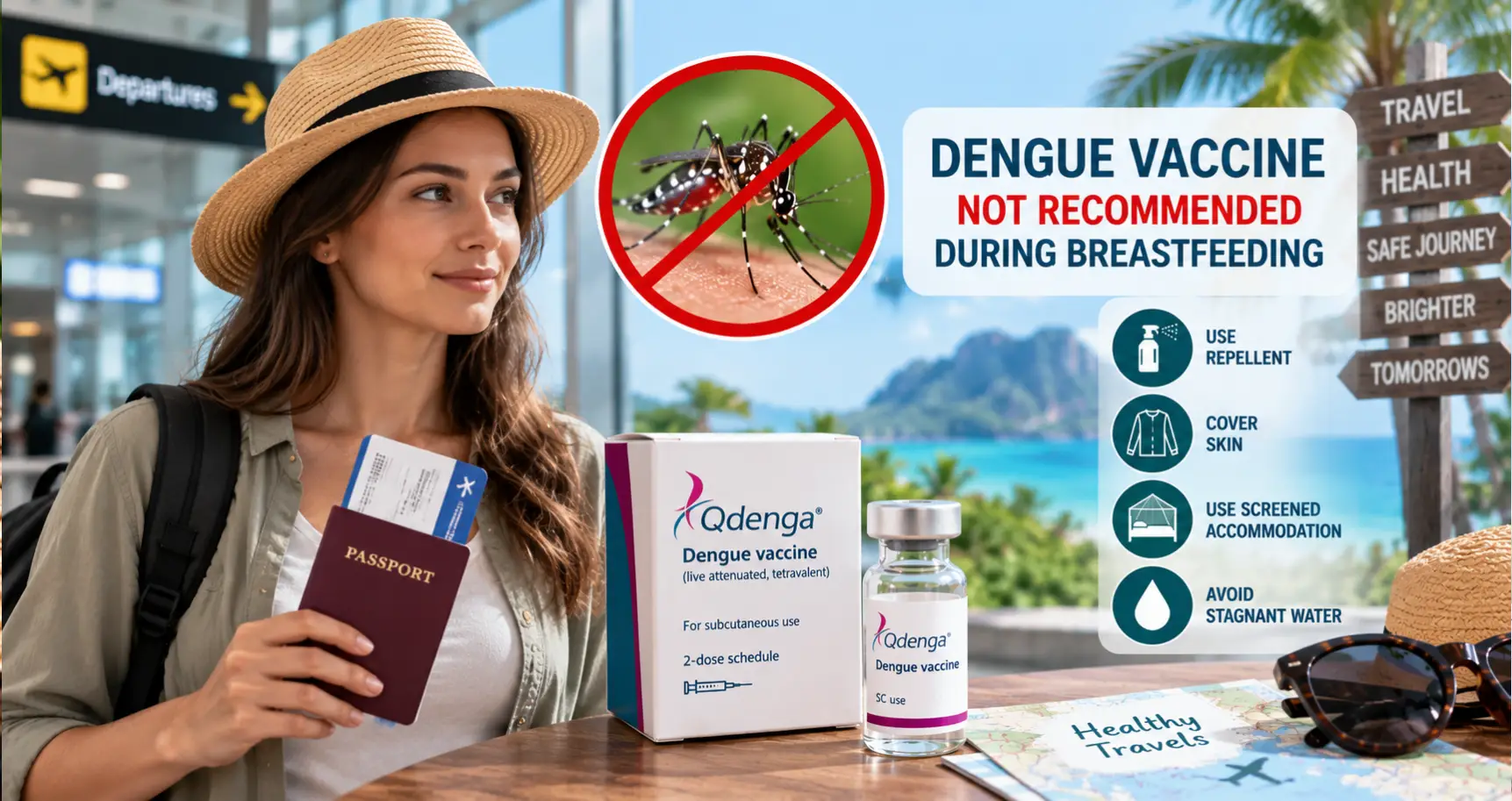
Dengue vaccination does not remove the need to avoid mosquito bites. Dengue is spread by mosquitoes that commonly bite during daytime hours. Use a suitable insect repellent, cover exposed skin where practical and use screened or air-conditioned accommodation when available. These precautions remain important whether you have completed Qdenga vaccination or not.
How to get personalised dengue travel advice
If you have previously had dengue, have received Qdenga before, or are travelling repeatedly to dengue-risk areas, take your infection and vaccination history to a travel-health assessment. The selected clinic or pharmacy is responsible for deciding whether vaccination is clinically appropriate and for confirming its own vaccine availability.
You can find a listed travel clinic through TravelJabs4U. A listing or booking route does not guarantee that Qdenga is in stock or suitable for you, so confirm the service with the selected provider.
Frequently asked questions
How long does dengue vaccination last?
There is no fixed individual protection period that can be used to decide when everyone needs another dose. Qdenga studies have followed protection for several years, but current UK guidance says there are no data establishing the need for or timing of a later reinforcing dose.
Do I need a booster before travel?
Not routinely on a fixed timetable. The standard Qdenga course is two doses three months apart, and the need for a later booster has not been established. A travel-health professional should review your previous dengue history, vaccine record and current itinerary.
Can I have a booster early?
Do not add or bring forward an extra Qdenga dose on your own. Current UK product information gives a two-dose schedule at 0 and 3 months and does not establish a later booster schedule.
What if I do not know when my last dose was?
Try to find your vaccination record and take any clinic, GP, pharmacy or overseas documentation to a travel-health assessment. A clinician can decide what evidence is reliable and whether further vaccination is appropriate.
Disclaimer
This page provides general UK travel-health information and does not replace an individual clinical assessment. Dengue risk, vaccine recommendations and official guidance can change. Qdenga is not suitable for every traveller, and a booking or clinic listing does not guarantee vaccination, stock or clinical suitability. Continue mosquito-bite precautions even if vaccinated and seek medical advice if you become unwell during or after travel.
Next step
For broad Qdenga eligibility and service information, read the Dengue Fever Vaccine UK: Cost, Eligibility and Booking page. If an assessment is appropriate, use the TravelJabs4U clinic directory to find a listed provider and confirm current availability directly with that clinic.