The short answer is no. Current UK product information states that Qdenga, the live attenuated dengue vaccine, is contraindicated during breastfeeding. TravelHealthPro gives the same advice for UK travellers. If you are breastfeeding, tell the travel-health clinician before any dose is given.
This does not mean you should stop breastfeeding simply to obtain a travel vaccine. The safer approach is to discuss your itinerary, previous dengue history and travel timing with a qualified clinician. They can explain whether dengue vaccination might be reconsidered later and help you plan mosquito-bite prevention for the current trip.
Why is Qdenga not given during breastfeeding?
Qdenga contains live, weakened dengue viruses. The current Summary of Product Characteristics says it is not known whether the vaccine is excreted into human milk and that a risk to a newborn or infant cannot be excluded. For that reason, the vaccine is contraindicated while breastfeeding.
A contraindication is stronger than a routine precaution: it means the vaccine should not be given in that situation under the current product information. Online advice from another country, or information about a different dengue vaccine, should not be used to override UK guidance.
Who is usually considered for dengue vaccination in the UK?
Qdenga is licensed from 4 years of age, but the licensed age range does not mean it is a routine vaccine for every traveller. Current UK travel guidance mainly considers it for people aged 4 and over who have had dengue infection before and are travelling to an area with dengue risk or an ongoing outbreak. It may also be considered for some people with occupational exposure. Exceptional use without previous dengue needs further expert advice.
For the wider service information, including broad eligibility, course timing and provider-specific access, read the dengue vaccine eligibility, timing and cost in the UK page. This breastfeeding guide deliberately does not repeat its price or booking content.
What should you do if you are breastfeeding and travelling to a dengue-risk area?
Arrange a travel-health assessment rather than relying on a vaccine booking form alone. The clinician should review your destination, route, length of stay, season, accommodation, planned activities, previous dengue infection and medical history. Even when Qdenga cannot be given, the appointment may help with other travel vaccines, medicines and practical risk reduction.
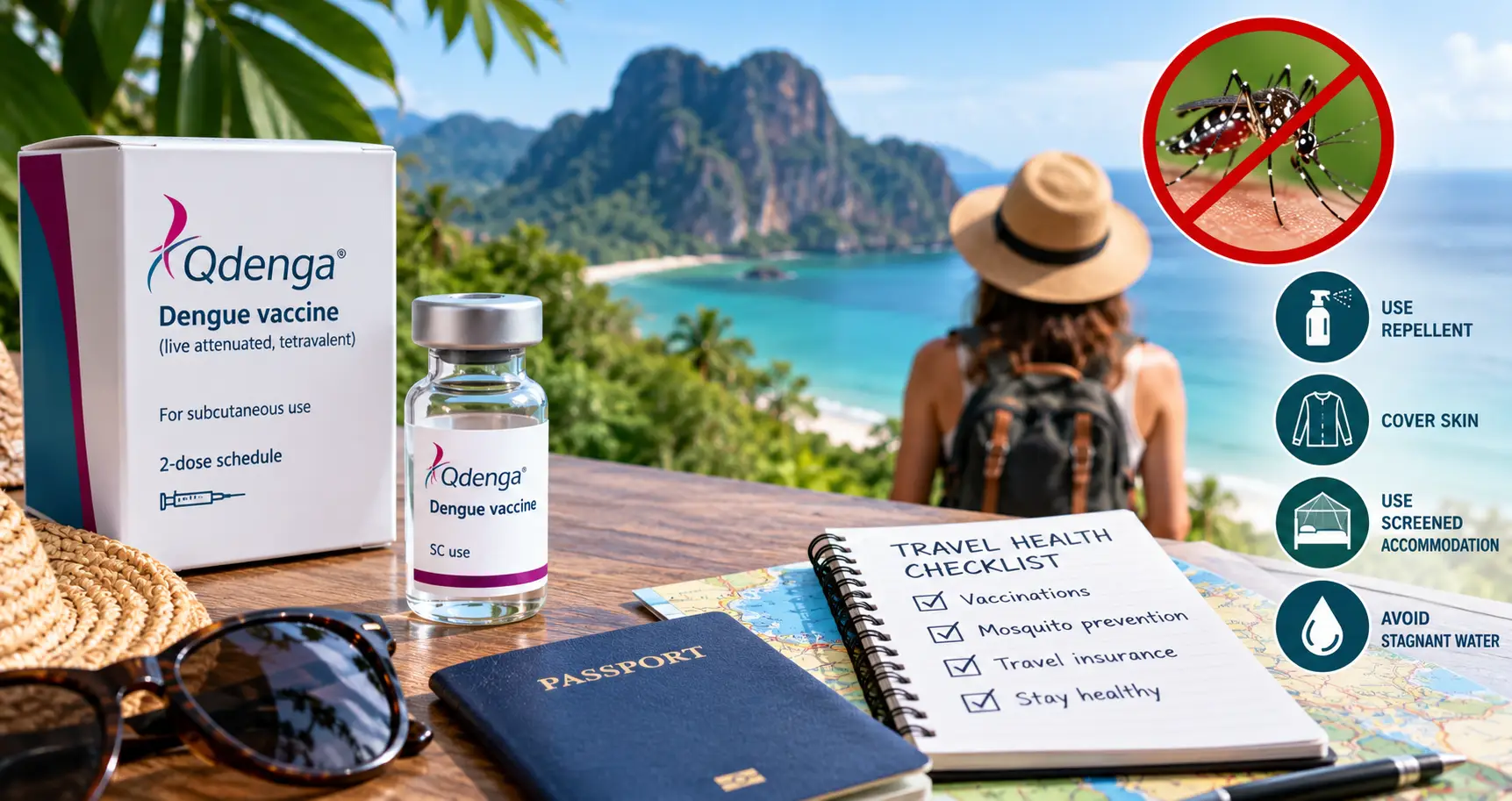
Mosquito-bite prevention remains the main protection against dengue for many travellers and is still necessary after vaccination. Dengue-spreading mosquitoes are active during the day, so prevention should not be limited to night-time.
- Use an insect repellent suitable for you and apply it as directed on the label.
- Cover exposed skin with loose clothing where practical.
- Choose screened or air-conditioned accommodation when available.
- Reduce exposure around standing water and use an appropriate mosquito net where needed.
- Check current destination advice and outbreak information close to departure.
- Seek medical advice for fever or other concerning symptoms during or after travel, and mention where you have been.
When could vaccination be reconsidered?
The Qdenga product information says the vaccine is contraindicated during breastfeeding, but it does not specify one standard waiting period after breastfeeding has ended. A clinician should confirm when vaccination may be reconsidered and whether you meet the wider UK criteria at that time.
Do not change your breastfeeding plan solely on the basis of a travel-vaccine article. Decisions about feeding, travel and vaccination should take account of the needs of both parent and child, the actual dengue risk, evidence of previous dengue infection and the time available before travel.
If vaccination may be relevant for a later trip, review planning the Qdenga course before travel. Qdenga uses two doses three months apart, so future planning may need to begin well before departure.
What if you have already received a dose while breastfeeding?
Contact the clinic that gave the vaccine, your GP or another qualified healthcare professional promptly for individual advice. Give them the vaccination date, product name if known, your child’s age, and any symptoms or concerns. Do not arrange another dose until a clinician has reviewed the situation.
Seek urgent medical help if you or your child develops symptoms of a severe allergic reaction or another serious problem. For non-urgent concerns, the clinician can advise on appropriate follow-up and reporting.
Children, older adults and long-term health conditions
Children
Qdenga is licensed from age 4. It is not licensed for children under 4, and current UK travel guidance still requires an individual risk assessment for older children. The fact that a breastfeeding parent cannot receive Qdenga does not automatically determine whether an eligible child should receive it; each traveller needs a separate assessment.
Older adults
The product information does not require a dose adjustment from age 60, but it also states that there are no data in people above 60 and limited data in people with chronic medical conditions. Older travellers therefore need careful review of their health, medicines, previous dengue history and itinerary.
Allergies, immune conditions and current illness
Qdenga must not be given to someone with hypersensitivity to a previous dose or to a vaccine component. It is also contraindicated for specified congenital or acquired immune deficiencies and certain immunosuppressive treatments. Vaccination should be postponed during an acute severe febrile illness, although a minor infection such as a cold does not automatically require delay. The clinician must make the decision after reviewing the full history.
What will the clinic check?
A safe assessment is more than confirming that a destination has dengue. Be ready to discuss:
- whether you are breastfeeding, pregnant, planning pregnancy or think you may be pregnant;
- the child’s age and any relevant health concerns;
- your destination, route, travel dates, length of stay and activities;
- any previous dengue illness, laboratory results or medical records;
- your vaccination history and any previous dengue vaccine;
- all medicines and treatments, especially those that affect the immune system;
- long-term health conditions, allergies and previous serious vaccine reactions; and
- whether you currently have a fever or significant illness.
The final decision belongs to the qualified professional carrying out the assessment. A booking request does not guarantee that vaccination will be recommended, available or supplied.
Frequently asked questions
Who should not have dengue vaccination?
Qdenga should not be given during breastfeeding or pregnancy, to children under 4, to people with specified immune suppression, or to anyone with hypersensitivity to a previous dose or a vaccine component. An acute severe febrile illness may also mean vaccination should be postponed. A clinician must check the full medical history before vaccination.
Is dengue vaccination safe during pregnancy or breastfeeding?
Current UK product information states that Qdenga is contraindicated during pregnancy and breastfeeding. If you are pregnant, breastfeeding, planning pregnancy or think you may be pregnant, tell the clinician before any dose is given.
Can children or older adults have dengue vaccination?
Qdenga is licensed from 4 years of age, but UK travel guidance mainly considers it for selected people with previous dengue infection and relevant travel or occupational risk. It is not licensed for children under 4. Although the product information does not require a dose adjustment from age 60, it also notes that data above 60 are lacking, so older adults need individual assessment.
What happens if I have an allergy or long-term health condition?
Tell the clinician about serious allergies, previous vaccine reactions, immune-system conditions, long-term illnesses and all medicines or treatments. Qdenga is contraindicated after hypersensitivity to a previous dose or its components and for specified immune suppression. Other conditions may require further assessment rather than automatic exclusion.
Discuss your travel plans with a qualified clinic
If you are breastfeeding and travelling to a dengue-risk destination, find a participating travel clinic and request an individual travel-health assessment. Tell the clinic that you are breastfeeding before the appointment and confirm what services it provides. TravelJabs4U helps users find listed providers; the selected clinic or pharmacy is responsible for assessment, clinical advice and any vaccination.
Medical disclaimer
This page provides general UK travel-health information and does not replace advice from a doctor, pharmacist or qualified travel-health professional. Guidance, destination risk and individual circumstances can change. Qdenga is contraindicated during breastfeeding and pregnancy under current UK product information. Do not stop breastfeeding, delay essential medical care or make a vaccination decision solely from this article. Seek urgent medical help for severe symptoms or a serious allergic reaction.