There is no separate set of vaccines simply because you are travelling to Bali for a honeymoon. For most UK travellers, the starting point is the same as for other trips to Indonesia: check that routine vaccinations are up to date, discuss hepatitis A if you have not previously been vaccinated, and expect typhoid to be considered for most travellers. What can change the plan is the honeymoon you are actually taking — where you will stay, what you will do, how long you will be away, whether you are travelling beyond Bali and how quickly you could reach suitable medical care.
Use this article to work out which itinerary details matter. For the complete destination-level recommendations, entry-health context and broader vaccine information, read the full Bali travel vaccination guide.
Your honeymoon itinerary matters more than the label “honeymoon”
A short stay in well-screened resort accommodation is not the same risk pattern as a trip that includes rural day tours, long outdoor activities, repeated animal contact or several Indonesian islands. The aim is not to collect the longest possible vaccine list; it is to identify the risks that actually fit your itinerary.
| Honeymoon plan | Why it may change the travel-health discussion |
|---|---|
| Mostly resort or hotel-based stay | You still need routine vaccine and food/water checks, but some selective vaccines may be less relevant than for a long or rural itinerary. |
| Rural or agricultural excursions | More mosquito exposure and time around rice fields or farms can make Japanese encephalitis assessment more relevant for some travellers. |
| Temples, monkeys, dogs, running or cycling | Animal exposure can increase rabies risk. Even small bites or scratches need urgent assessment. |
| Bali plus other Indonesian islands | Malaria and other travel-health advice can change by island and region; Bali advice should not be applied to the whole country. |
| Pregnancy planned soon after the trip | Indonesia has Zika risk, so current pregnancy-planning guidance deserves specific attention before travel. |
Core vaccine checks for a Bali honeymoon
Keep this part simple. The broad Bali page owns the full vaccine discussion; for a honeymoon, the practical question is which parts of that guidance apply to your route and activities.
- Routine UK vaccinations: check that vaccines such as MMR and diphtheria, tetanus and polio are up to date for your age, medical history and previous doses.
- Hepatitis A: current TravelHealthPro guidance recommends vaccination for previously unvaccinated travellers to Indonesia.
- Typhoid: current TravelHealthPro guidance recommends vaccination for most travellers to Indonesia; food and water precautions still matter after vaccination.
- Hepatitis B, rabies and Japanese encephalitis: these are more selective. Their relevance depends much more on activities, trip length, location, medical circumstances and access to care.
If your honeymoon is part of a wider Indonesia trip, use the Indonesia travel vaccination guide for the broader route rather than assuming Bali advice applies everywhere.
Activities, animals and access to care can change the plan
Rural excursions and Japanese encephalitis
Japanese encephalitis occurs countrywide in Indonesia. Vaccination can be considered for travellers staying in affected areas for a month or more, frequent travellers, people with uncertain itineraries, and some shorter trips with increased rural or agricultural exposure such as visits near rice fields or pig farms. A brief hotel-based holiday is therefore a different assessment from a honeymoon with repeated rural stays, trekking or agricultural visits.
Dogs, monkeys and rabies
Rabies is a risk in Indonesia, and the FCDO specifically warns about street dogs in Bali and monkeys around temples and tourist areas. Pre-exposure vaccination is more relevant for some travellers, including those with increased animal exposure, longer stays, running or cycling, or limited access to prompt post-exposure care.
Avoid touching or feeding animals. After any bite or scratch, wash the wound thoroughly and seek urgent local medical assessment even if you had rabies vaccination before travel.
Malaria, dengue and mosquito-bite prevention
TravelHealthPro currently classifies Bali as a low-malaria-risk area. For most travellers, awareness of the risk and careful mosquito-bite avoidance are advised rather than routine antimalarial tablets. Antimalarials may still be considered in exceptional circumstances for people at higher risk of malaria or severe complications after an individual assessment.
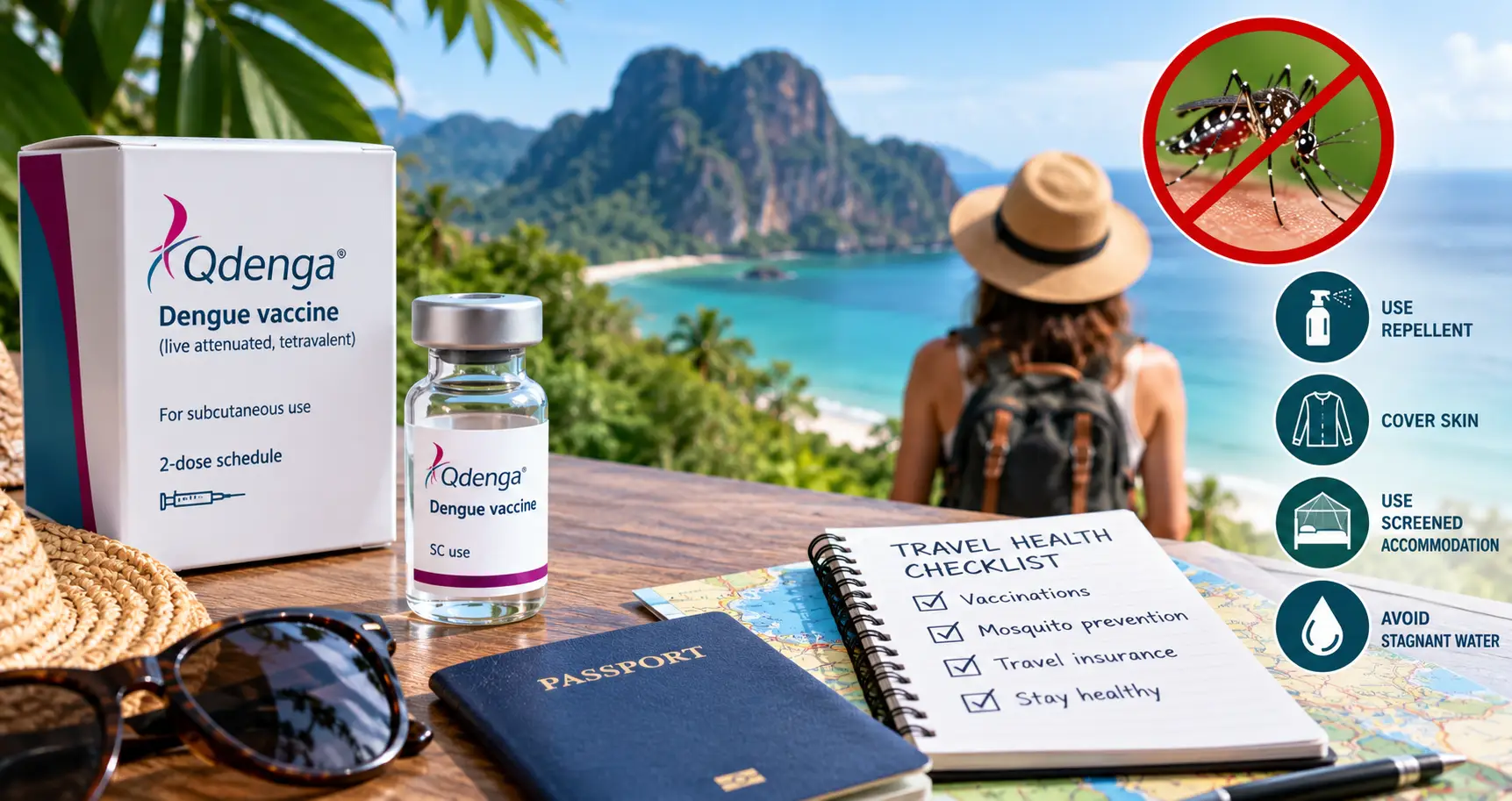
Low malaria risk does not mean mosquito bites can be ignored. Dengue, chikungunya and Zika are risks in Indonesia. Use an effective repellent, cover exposed skin where practical, and choose accommodation with good screening or air conditioning when available. If your route continues beyond Bali, malaria advice may change and the full itinerary should be assessed.
If pregnancy is part of your plans, check Zika advice before travel
This is one area where a honeymoon-specific conversation can be genuinely useful. TravelHealthPro currently identifies Zika risk in Indonesia, and 2026 surveillance included travel-associated cases linked to Indonesia, with reports associated with Bali and neighbouring islands.
Current TravelHealthPro advice says women should avoid becoming pregnant while travelling in Indonesia and for two months after their last possible Zika exposure. If a male partner has travelled, couples are advised to avoid conception for three months after the last possible exposure; the same three-month period applies when both partners travelled. Pregnant travellers should discuss the suitability of travel and the potential Zika risk with their healthcare professional.
These time periods can change with surveillance and official guidance. Recheck the latest TravelHealthPro advice before travel and before making pregnancy-planning decisions.
When should you arrange Bali honeymoon vaccinations?
Start early enough to make decisions rather than simply trying to fit vaccines in at the last minute. The FCDO advises checking the latest Indonesia vaccine recommendations at least eight weeks before travel. TravelHealthPro advises arranging a travel-health appointment ideally at least four to six weeks before departure.
For a honeymoon, a sensible approach is to review your itinerary and current guidance around eight weeks before you go, then arrange the clinical assessment early enough to complete any vaccine course that is recommended. If departure is sooner, still seek advice; some useful vaccination and prevention measures may remain possible.
Bali honeymoon pre-departure checklist
- Write down your exact Bali itinerary, including rural excursions, temples, animal attractions and any overnight stays away from the main tourist areas.
- List any onward travel to other Indonesian islands or nearby countries.
- Check your routine and previous travel-vaccination records.
- Tell the travel-health professional about running, cycling, trekking, animal contact, tattoos or piercings, and any other activities that could change exposure risk.
- If pregnancy is planned, check the latest Zika guidance before travel and before deciding when to try to conceive.
- Plan mosquito-bite protection for daytime and evening exposure.
- Choose travel insurance that matches your activities and provides appropriate cover for treatment or medical evacuation.
- Take details of regular medicines and relevant medical conditions to the assessment, and check that you can carry your medicines legally into Indonesia.
Book an itinerary-based travel-health assessment
Use the full Bali travel vaccination guide as the destination owner, then find a participating travel clinic for an individual assessment based on your dates, route, accommodation, activities, vaccination history and health. TravelJabs4U publishes travel-health information and helps users discover participating clinics; the selected clinic or pharmacy is responsible for the clinical assessment and any vaccination service it provides. A booking request does not guarantee that a particular vaccine, medicine, appointment time or stock level will be available or suitable.
Frequently asked questions
Do honeymoon travellers need extra vaccines for Bali?
Not automatically. Most honeymoon travellers start with the same core checks as other UK visitors to Indonesia: routine vaccinations, hepatitis A if previously unvaccinated, and typhoid for most travellers. Extra discussion may be needed if your itinerary includes rural exposure, animal contact, a longer stay, limited access to medical care or travel beyond Bali.
How early should I get vaccines for Bali?
Start checking current advice around eight weeks before departure if possible, and aim to arrange a travel-health appointment at least four to six weeks before travel. If you are leaving sooner, an assessment can still be worthwhile because some vaccines and practical prevention measures may still be useful.
Does staying in rural areas change the advice?
It can. Rural or agricultural exposure may increase mosquito exposure and can make Japanese encephalitis vaccination more relevant for some travellers. Remote stays can also affect rabies planning if prompt post-exposure treatment would be difficult to reach. Your exact location, activities and length of stay matter.
Do I need malaria tablets for my Bali itinerary?
For most Bali itineraries, routine antimalarial tablets are not advised because TravelHealthPro currently classifies Bali as a low-malaria-risk area. Tablets may be considered in exceptional higher-risk circumstances after an individual assessment, and the recommendation can change if your trip includes other parts of Indonesia.
Disclaimer
This article provides general UK travel-health information and does not replace an individual pre-travel or medical assessment. Vaccine recommendations, malaria advice, disease activity, pregnancy-planning guidance and entry requirements can change. Advice depends on your exact itinerary, length and style of travel, age, medical history, medicines, pregnancy status, immune status and previous vaccination. Seek urgent medical care after any animal bite or scratch and for significant illness during or after travel.