Volunteering in Kenya does not automatically mean you need a separate set of “volunteer vaccines”. What changes is the risk assessment. A longer placement, rural or remote work, healthcare or humanitarian duties, animal contact, close community living and limited access to medical care can make some vaccines or malaria-prevention measures more relevant than they would be for a short city break. Start with the main Kenya travel vaccination guidance, then assess the details of your placement and any side trips.
The most useful information for a travel-health appointment is your exact location, how long you will stay, what you will actually do, the type of accommodation, how quickly you could reach reliable medical care, and your previous vaccination and medical history. Those details matter more than the word “volunteer” on its own.
Why volunteers may need different planning for Kenya
A volunteer placement can involve more exposure time and a wider range of activities than a conventional holiday. You may spend weeks or months in one community, work outdoors, travel on local roads, share accommodation, eat locally every day, handle animals, provide first aid or healthcare, or spend weekends in other parts of Kenya. Each of these can change the balance of travel-health risks.
There is no single vaccine list that fits every volunteer. A teacher based in Nairobi, a wildlife-conservation volunteer near a reserve and a healthcare worker in a remote clinic can all need different discussions before departure.
| Volunteer setting or activity | Why it matters |
|---|---|
| Community, teaching or long-stay placement | Longer exposure can increase the importance of food-and-water precautions, mosquito prevention, routine vaccine checks and planning for access to care. |
| Healthcare, first aid or work involving blood/body fluids | Hepatitis B becomes more relevant where occupational exposure is possible. Some placements may also have their own occupational-health requirements. |
| Animal, wildlife or conservation work | Rabies deserves specific assessment because Kenya has rabies risk and animal-related work can increase the chance of exposure. |
| Humanitarian or field work | Cholera, hepatitis B, meningococcal disease, wound care and access to safe water or medical treatment may need closer review depending on the exact role and setting. |
| Rural or remote placement | Malaria, yellow fever, rabies and access to post-exposure or emergency care can vary by exact location and itinerary. |
Core vaccine considerations
The starting point is the same as for other UK travellers to Kenya: check that your routine UK vaccinations are up to date and then review the Kenya-specific recommendations. Current TravelHealthPro guidance recommends hepatitis A vaccination for previously unvaccinated travellers and places tetanus and typhoid among the recommendations for most travellers.
Typhoid becomes particularly relevant for frequent or long-stay travel and where sanitation or food hygiene may be poor. Tetanus protection matters whenever cuts, puncture wounds, burns or injuries could occur, especially if access to medical facilities may be limited. Vaccination reduces specific risks, but it does not replace safer food and water choices, wound care or other practical prevention measures.
This article deliberately does not reproduce the full country vaccine list. Use the Kenya destination guide for the broad country overview, then use your volunteer role and itinerary to decide which additional topics need a personalised assessment.
Extra risks from trip length, activities or location
Healthcare or humanitarian volunteering
If your work may expose you to blood or body fluids, hepatitis B vaccination needs specific consideration. TravelHealthPro recommends it for travellers whose activities increase exposure risk, including health and aid workers, and it also highlights long stays as a reason for closer assessment.
Humanitarian work can also change the cholera discussion. Cholera vaccination is not routine for every Kenya traveller, but TravelHealthPro recommends it for people whose activities or medical circumstances create higher risk, including humanitarian aid workers and people working in outbreak settings with limited access to safe water and medical care. Some healthcare workers and long-stay travellers with close local contact may also need meningococcal ACWY assessed.
Ask your employer or volunteer organisation whether it has occupational-health requirements for your exact role. Placement rules can be more specific than general travel advice, particularly for clinical, laboratory or other exposure-prone work.
Animal, wildlife or conservation work
Rabies is a risk in Kenya and has been reported in domestic animals. Pre-exposure rabies vaccination is recommended for travellers whose work or activities increase exposure, for people travelling where prompt post-exposure care may be difficult to access, and for long-stay travellers. Animal work, conservation projects, frequent outdoor activity and remote travel can all make that discussion more important.
Pre-travel rabies vaccination does not remove the need for urgent treatment after a bite, scratch or saliva exposure. Wash the area thoroughly and seek prompt local medical assessment even if you were vaccinated before travel. If rabies vaccination is being considered, review the rabies vaccination schedule early enough to plan the course with a qualified travel-health professional.
Rural, remote or multi-region placements
Do not assume that arriving through Nairobi means your whole trip has Nairobi-level risk. Volunteer programmes may include field sites, rural communities, national parks, coastal travel or weekend trips. Yellow fever recommendations vary within Kenya, and malaria risk also changes by location and altitude.
TravelHealthPro reports yellow fever transmission risk in parts of Kenya. Vaccination is recommended for many higher-risk areas, while travel only to certain lower-exposure areas, including Nairobi and Mombasa, is treated differently. Yellow fever vaccine is not suitable for everyone, so the decision should be based on the exact route and an individual risk assessment. Your transit countries can also affect certificate requirements.
Remote placements also make access to medical care part of the risk calculation. FCDO advises travellers to check that their destination can provide the healthcare they may need and to have appropriate insurance for local treatment or unexpected medical evacuation.
Malaria and mosquito-bite considerations
Malaria is an important issue for many Kenya volunteer itineraries. TravelHealthPro currently describes high malaria risk in Kenya overall, while the city of Nairobi and highlands above 2,500 metres are classed as very low risk. The exact recommendation depends on where you sleep, the season, how long you stay, your activities and accommodation, as well as your age, pregnancy status, medical history and current medicines.
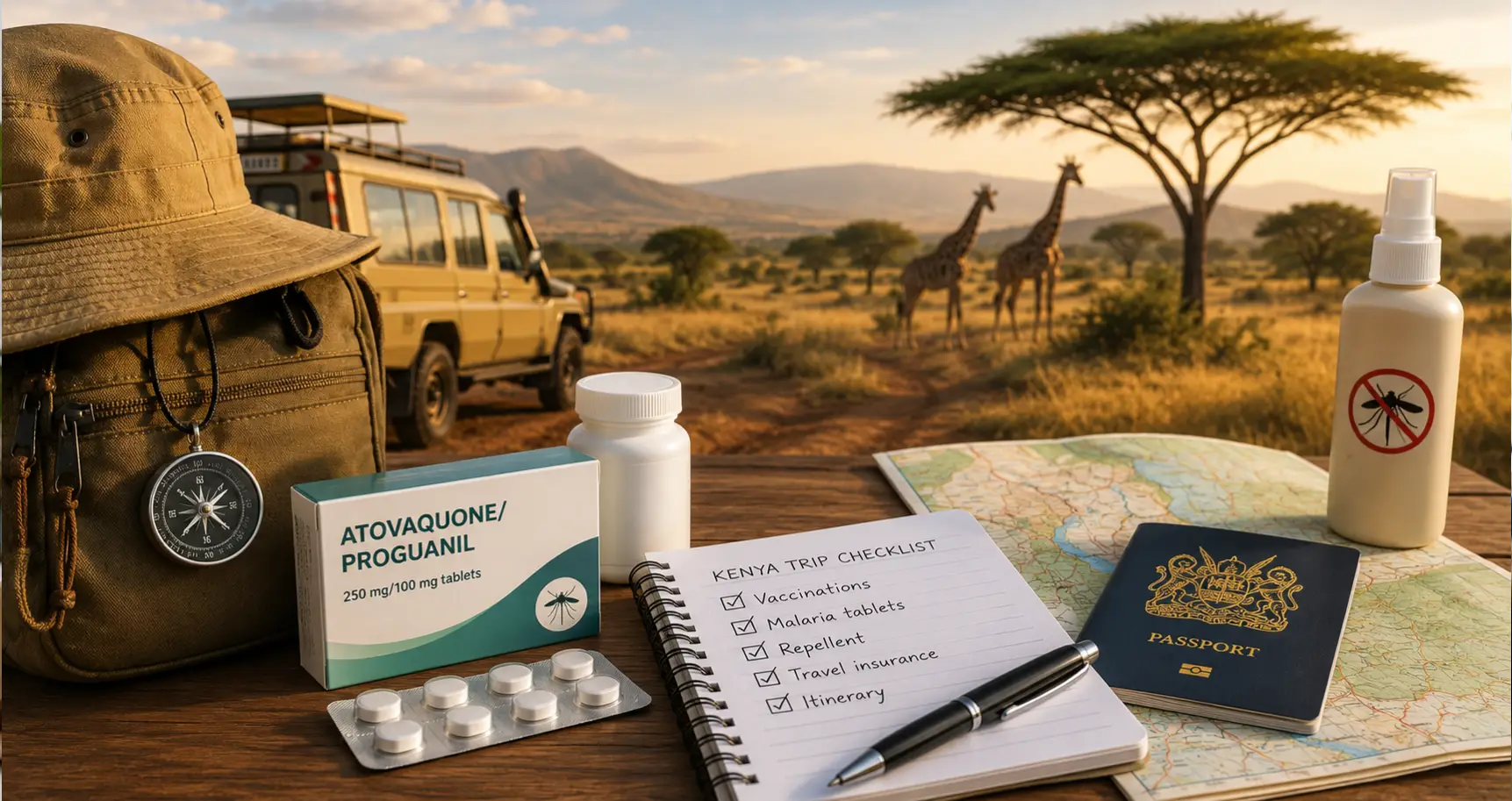
This is especially important for volunteers because a placement address may not describe the whole trip. Include training days, field visits, weekends away, safari trips and any travel before or after the project when your malaria risk is assessed. If antimalarials are recommended, the clinician should select the option and course that fits the full itinerary. You can review malaria tablets and assessment information before booking, but do not choose a medicine from price or destination name alone.
Mosquito-bite prevention remains important whether or not tablets are advised. Use an effective repellent, cover exposed skin when practical, choose screened or air-conditioned rooms where available, and use a suitable mosquito net when sleeping areas are not adequately protected. Seek urgent medical care for fever or symptoms suggestive of malaria during travel or after returning from a malaria-risk area, and tell the clinician where you have been.
When to start vaccinations
Start planning early. FCDO advises checking Kenya vaccine recommendations at least 8 weeks before travel. TravelHealthPro and the NHS advise arranging a travel-health appointment at least 4 to 6 weeks before departure where possible. For a long placement, a multi-country itinerary or a role with occupational-health requirements, starting around 8 weeks before travel gives more time to review records and complete any multi-dose courses that are appropriate.
If you are travelling sooner, still arrange an assessment. A shorter lead time does not mean that useful vaccination, malaria prevention or risk-reduction advice is impossible; it simply makes it more important to speak to a qualified professional promptly.
Pre-departure checklist for Kenya volunteers
- Write down the exact placement location, including county, town or rural area where possible — not just “Kenya”.
- List every side trip, weekend destination, safari, coastal stay, border crossing and transit country.
- Record the full length of the placement and any travel before or after it.
- Describe your role clearly, including healthcare, first aid, animal work, conservation, construction, teaching, community outreach or field activity.
- Note whether you may handle blood/body fluids, work with animals, spend long periods outdoors or stay far from reliable medical care.
- Bring your routine and previous travel-vaccination records if you have them.
- List your medicines, allergies and relevant health conditions, and tell the clinician if you are pregnant, breastfeeding or immunocompromised.
- Check your volunteer organisation’s occupational-health requirements and emergency arrangements.
- Arrange appropriate travel insurance and check current FCDO advice before departure.
Before you leave, compare your placement with the main Kenya travel vaccination guidance and take the full itinerary to a travel-health professional. When you are ready to arrange an assessment, you can find a travel clinic near you through TravelJabs4U. The selected clinic or pharmacy is responsible for the clinical assessment and any vaccination or medicine supply; a booking does not guarantee that a particular vaccine or medicine will be recommended, suitable, available or in stock.
Frequently asked questions
Do volunteers need extra vaccines for Kenya?
Not automatically. Volunteer work can change your risk profile because long stays, rural or remote work, close community contact, healthcare duties, animal contact or limited access to medical care can make additional vaccines or prevention measures more relevant. A travel-health professional should assess your exact placement and itinerary.
How early should I get vaccines for Kenya?
Start planning about 8 weeks before departure where possible. TravelHealthPro and the NHS advise arranging a travel-health appointment at least 4 to 6 weeks before travel, while FCDO advises checking Kenya vaccine recommendations at least 8 weeks before the trip. If you are leaving sooner, still seek advice.
Does staying in rural areas change the advice?
Yes, it can. Rural or remote stays can change malaria, rabies and yellow fever considerations and may reduce access to prompt medical care. The exact location, duration, accommodation and activities should be included in your risk assessment.
Do I need malaria tablets for my Kenya itinerary?
Often, but not for every area. TravelHealthPro describes high malaria risk in Kenya overall, while Nairobi and highlands above 2,500 metres are very low risk. Your exact route, season, accommodation, activities and health history determine whether antimalarials are advised.
Disclaimer
This page provides general UK travel-health information and does not replace an individual pre-travel or medical assessment. Vaccine recommendations, malaria advice, disease activity and entry or certificate requirements can change. Advice depends on your exact itinerary, role, length of stay, accommodation, access to medical care, age, medical history, medicines, pregnancy or breastfeeding status, immune status and previous vaccination. Check current TravelHealthPro and FCDO guidance before travel, and seek urgent medical care for significant illness or after a possible rabies exposure.