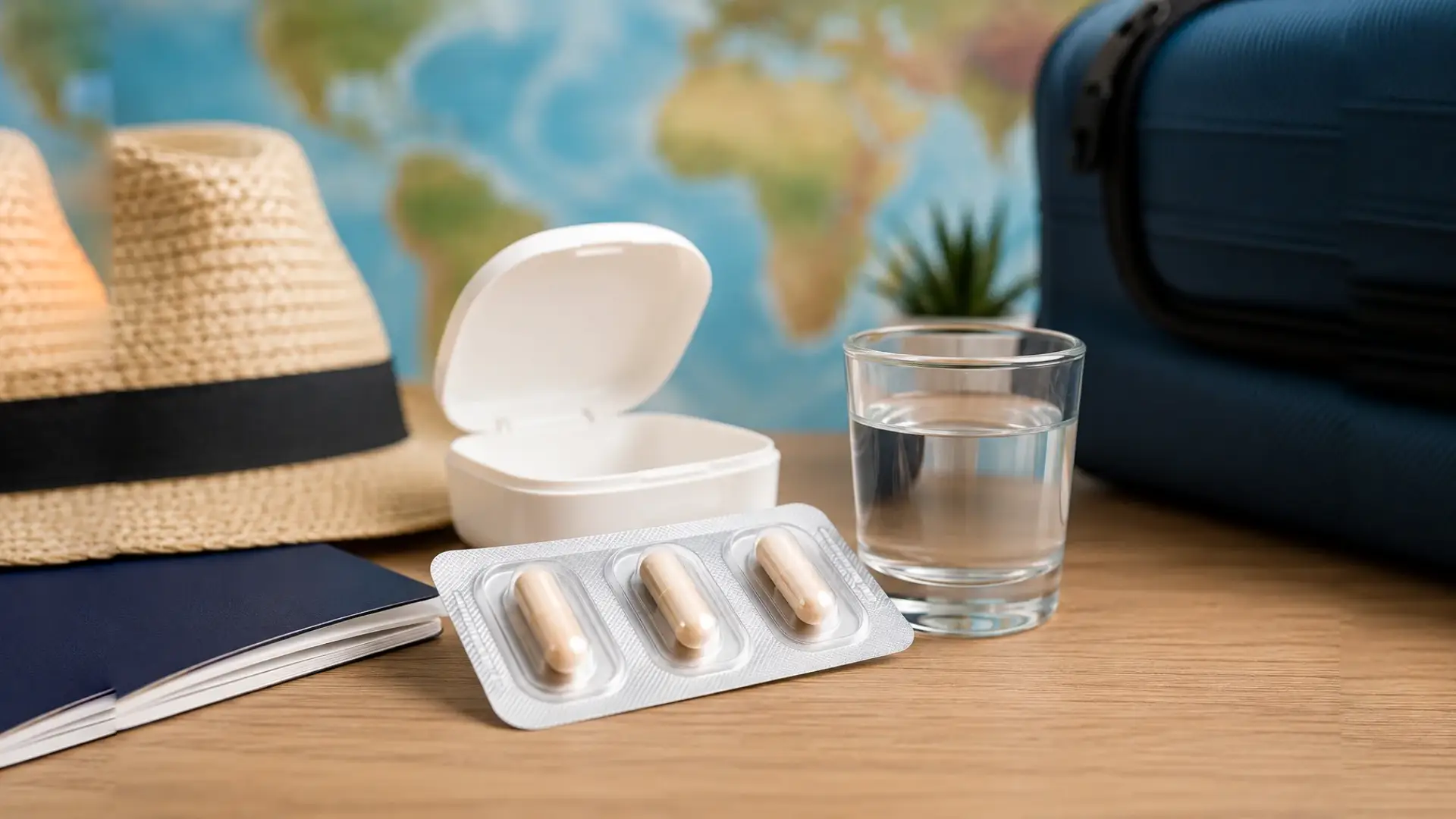
The malaria pills price in the UK depends on the medicine, the length of the full prevention course and the clinic or pharmacy that supplies it. For 2026, doxycycline is currently advertised from £10 per week on this service page. Treat that as a starting price, not a fixed course total or a price that applies at every participating clinic.
Antimalarial choice should follow an itinerary-based malaria risk assessment. There is no single tablet that is right for every traveller, and the cheapest headline price may not produce the lowest full-course cost. For a detailed comparison of atovaquone/proguanil, doxycycline and mefloquine, read our malaria tablets UK guide.
How Much Do Malaria Pills Cost in the UK?
The current TravelJabs4U starting price for doxycycline is £10 per week. The final amount you pay can be higher because malaria prevention courses include doses taken before entering a malaria-risk area and, depending on the medicine, for a period after leaving it.
Before paying, ask the selected provider for the full-course price rather than comparing only a weekly or per-tablet figure. The total can depend on:
· the antimalarial medicine and whether a branded or generic product is supplied;
· the number of days spent in the malaria-risk area plus the required pre-travel and post-travel doses;
· adult or paediatric strength and the total quantity required;
· whether a consultation, assessment or private-prescription fee is charged separately;
· the clinic or pharmacy providing the service; and
· delivery or other service charges, if an online supply route is actually used.
Prices and inclusions can vary between participating providers. Do not assume that a consultation, prescription or delivery is included unless the clinic or pharmacy confirms it for your booking.
Doxycycline Price: What Does “From £10 per Week” Mean?
“From £10 per week” is a starting price for doxycycline, not a standard price for every traveller. UK malaria guidance recommends doxycycline for some destinations and itineraries, but the number of capsules required depends on the whole prevention schedule, not just the number of days abroad.
For adults where doxycycline is clinically appropriate, UKMEAG 2026 guidance uses a daily regimen starting 1 to 2 days before entering the malaria-risk area, continuing throughout exposure and for 4 weeks after leaving. That longer post-travel period is one reason a low weekly starting price should not be treated as the final course cost.
Do not calculate or extend a course yourself. The provider should confirm the destination recommendation, suitability, quantity and instructions for the exact medicine supplied.
Why Malarone and Other Malaria Tablet Prices Vary
Malarone is a brand of atovaquone/proguanil. Generic atovaquone/proguanil products and other antimalarials may also be considered. TravelJabs4U does not have one verified network-wide Malarone price that can safely be applied to every clinic, product or course length, so this page should not publish an invented fixed figure.
The legal supply route also differs by product. UKMEAG 2026 notes that doxycycline and mefloquine are prescription-only medicines, while Maloff Protect, an atovaquone/proguanil product, can be supplied through pharmacies to eligible adults after pharmacist assessment. Other atovaquone/proguanil products or patient groups may require a prescription or another appropriate clinical supply route.
For a fuller explanation of the differences between common options, including course timing and suitability considerations, see the malaria tablets UK guide.
Are Malaria Tablets Free on the NHS?
Malaria prevention medicines for travel are normally paid for privately rather than supplied at NHS expense. A GP practice, pharmacist or travel-health professional may still provide advice about malaria risk, but the tablets themselves are generally a private travel cost.
Some antimalarial products can be supplied by a pharmacist after assessment, while prescription-only options require an appropriate prescribing or clinical supply route. Ask the provider to explain the medicine cost and any separate consultation or private-prescription charge before you proceed.
Do You Need Malaria Tablets for Your Destination?
A country name alone is not enough to decide whether malaria tablets are needed. Risk can vary within the same country by region, altitude, season, rural or urban exposure, accommodation and access to medical care. Personal factors such as pregnancy, age, immune suppression, medical history and current medicines can also affect the recommendation.
Use the TravelJabs4U destination guide to check the places on your route, then discuss the exact itinerary during an assessment.
Avoid blanket rules such as “everyone going to Africa needs the same tablets”. Many destinations in sub-Saharan Africa have important malaria risk, but the recommendation still depends on the exact country, region and traveller.
How a Malaria Risk Assessment Affects the Price
A useful quote starts with the clinical assessment because the medicine and quantity cannot be chosen safely from price alone. Bring or provide:
· every country, region and overnight stop, including side trips and border crossings;
· the dates you enter and leave each malaria-risk area;
· the age and weight of each traveller where relevant;
· pregnancy or breastfeeding information;
· medical conditions, allergies and all current medicines or supplements; and
· any previous antimalarial use, side effects or difficulty completing a course.
Once the provider has confirmed whether chemoprophylaxis is advised and which options are suitable, you can compare the full-course quantity and cost on a like-for-like basis.
Where Can You Get Malaria Tablets in the UK?
Malaria prevention medicines can be obtained through travel clinics, community pharmacies and other regulated services that provide an appropriate assessment. Depending on the exact medicine and traveller, supply may be by pharmacist sale, prescription, pharmacist prescribing or another lawful clinical route.
TravelJabs4U publishes travel-health information and helps travellers find participating clinics and booking routes. The selected clinic or pharmacy is responsible for the clinical assessment, prescription or supply route, medicine availability and final price.
You can find a participating travel clinic in the TravelJabs4U clinic directory or use the local booking page to choose a suitable location.
How to Book Malaria Advice Through TravelJabs4U
Booking should be for a malaria risk assessment or travel-health consultation rather than a promise of a particular medicine.
1. Check your itinerary and travel dates before starting the booking.
2. Find a participating clinic or local booking route.
3. Provide your medical history, medicines, allergies and relevant pregnancy or breastfeeding information.
4. Discuss whether malaria tablets are advised and which options are clinically suitable.
5. Confirm the exact quantity, total price, service fees and availability before accepting supply.
A booking request or appointment does not guarantee that doxycycline, atovaquone/proguanil, mefloquine or another antimalarial will be suitable, prescribed, supplied or in stock.
Safety, Side Effects and Mosquito-Bite Prevention
No antimalarial regimen is 100% effective. If tablets are advised, they should be combined with mosquito-bite prevention, including appropriate repellent, clothing and sleeping arrangements for the destination.
Different medicines have different side effects and contraindications. Doxycycline can cause gastrointestinal irritation and photosensitivity; atovaquone/proguanil has its own suitability and interaction checks; and mefloquine requires specific screening, including for some psychiatric and seizure histories. Read the patient information supplied with the exact product and seek professional advice about persistent or worrying effects.
Pregnancy, breastfeeding, childhood, kidney or liver disease and interacting medicines can materially change the choice. The malaria tablets UK guide explains the common options in more detail, but the final decision should be individual.
When to Seek Urgent Medical Advice
Malaria can occur even when prevention tablets were taken correctly. If you develop fever or other possible malaria symptoms while travelling, seek medical advice promptly rather than waiting until you return to the UK.
After travel, get urgent medical advice if malaria symptoms develop and you have been in a malaria-risk area during the previous 12 months. Tell the healthcare professional where and when you travelled and that malaria is a possibility.
Conclusion
Compare the full-course cost, not only a weekly or per-tablet headline price. Doxycycline is currently advertised from £10 per week, but the final malaria pills price depends on the itinerary, medicine, required quantity, selected provider and any consultation or prescription-related fee.
Check the destination risk first, then arrange an assessment through a participating clinic. The provider can confirm whether tablets are advised, which option is suitable and the complete price before supply.
Author & Review
Written by the TravelJabs4U Editorial Team. Medically reviewed by Mohammed Shajan Ali, MPharm, GPhC-registered pharmacist (GPhC No. 2067785).
Frequently Asked Questions
How much do malaria tablets cost in the UK?
Doxycycline is currently advertised from £10 per week on this TravelJabs4U service page. That is a starting price, not a universal full-course total. Final cost varies by medicine, course length, quantity, provider and any consultation, prescription or delivery fees.
Is £10 per week the full doxycycline course price?
No. The course includes doses before entering the malaria-risk area, throughout exposure and for the required period afterwards. For doxycycline, UKMEAG 2026 guidance normally continues the medicine for 4 weeks after leaving the risk area, so the full quantity can exceed the number of days spent abroad.
Are malaria tablets free on the NHS?
Malaria prophylaxis for travel is normally a private cost rather than being supplied at NHS expense. You may still be able to obtain travel-health advice through NHS or pharmacy services, depending on local arrangements.
Can I buy malaria tablets over the counter in the UK?
It depends on the product and traveller. Maloff Protect, an atovaquone/proguanil product, can be supplied through pharmacies to eligible adults after assessment. Doxycycline and mefloquine are prescription-only medicines, although pharmacists may be able to prescribe or supply them through appropriate clinical routes.
Is Malarone cheaper or more expensive than doxycycline?
There is no reliable universal answer. Malarone and generic atovaquone/proguanil prices vary by product, pack, provider and course length. Compare the complete course only after suitability has been assessed.
Do I need malaria tablets for Africa?
Not every African itinerary has the same recommendation. Malaria risk can vary by country and region, and the appropriate medicine depends on the route, resistance patterns and individual health factors. Check the exact itinerary rather than using a continent-wide yes-or-no rule.
When should I start malaria tablets?
The timing depends on the medicine. UKMEAG 2026 guidance normally starts doxycycline and atovaquone/proguanil 1 to 2 days before entering a malaria-risk area, while mefloquine is usually started 2 to 3 weeks beforehand. Follow the instructions for the exact medicine supplied.
Are malaria tablets 100% effective?
No. Correctly selected and taken malaria tablets can substantially reduce risk, but no regimen gives complete protection. Mosquito-bite prevention and prompt medical assessment of possible malaria symptoms remain essential.
Disclaimer
This page provides general travel-health information and price guidance. It is not an individual malaria risk assessment, prescription or guarantee of medicine supply. Recommendations, medicine licensing, prices, provider fees, stock and availability can change. Advice depends on the exact itinerary, season, duration, age and weight, pregnancy or breastfeeding, medical history, allergies, kidney and liver function, current medicines and previous antimalarial reactions. Follow the instructions supplied with the exact medicine and the advice of the clinician or pharmacist responsible for your care. Seek urgent medical advice for possible malaria symptoms during travel or after return, including symptoms occurring within 12 months of visiting a malaria-risk area.