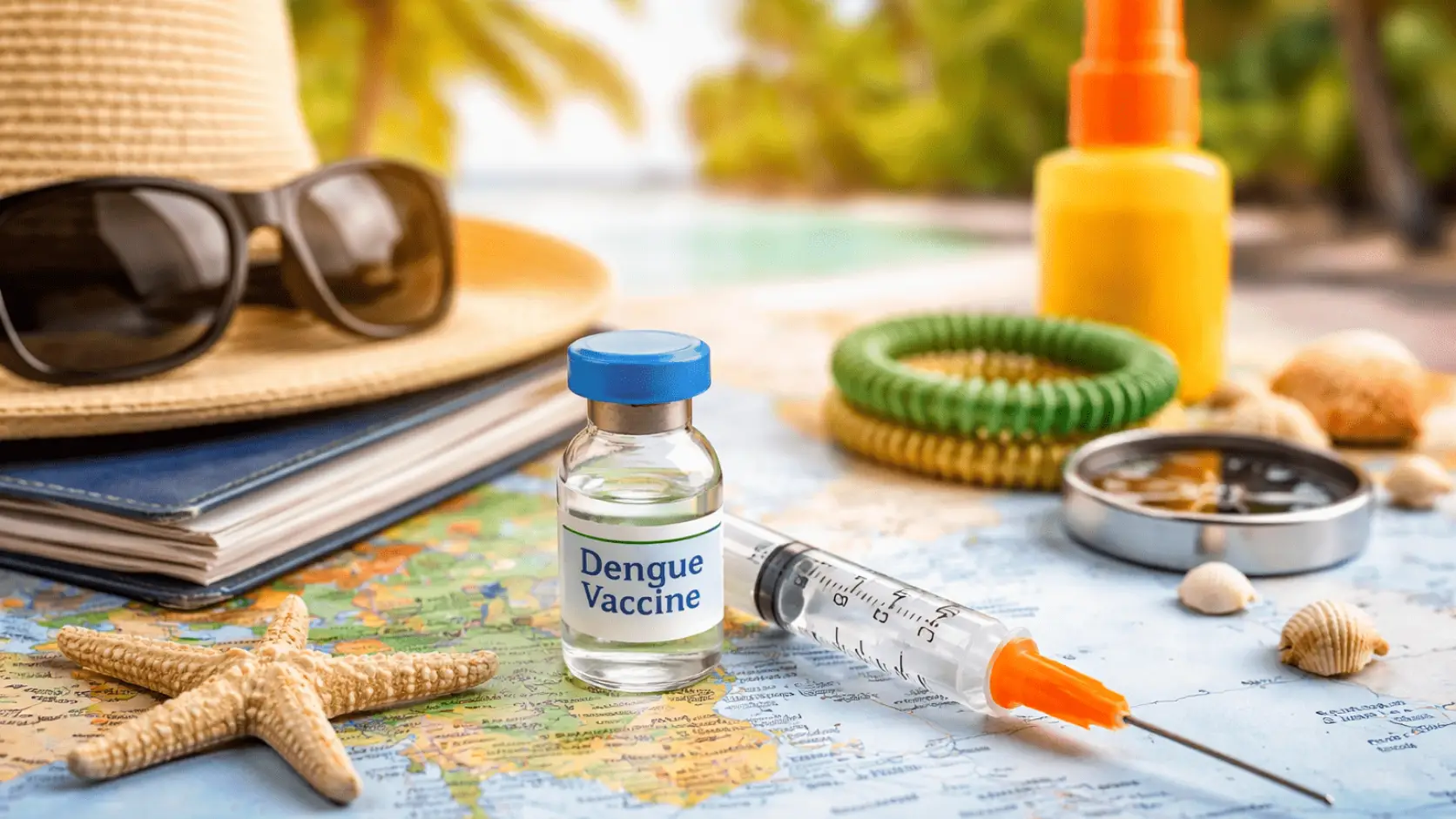
The diphtheria tetanus and polio vaccine used for UK travel boosters is usually the combined Td/IPV vaccine. It boosts protection against tetanus, diphtheria and polio in one injection. Travel clinics often shorten the service name to “DTP vaccine”, but the adult and teenage UK formulation is commonly described as Td/IPV.
A booster is not automatically needed every 10 years for every adult. Current UK guidance first looks at whether your routine vaccination course is complete, the date of your last relevant dose, your destination and whether prompt medical care would be difficult to access. If vaccination is clinically indicated, TravelJabs4U can help you review current price guidance and find a listed clinic or pharmacy, but the selected provider makes the final clinical decision.
What Is the DTP or Td/IPV Vaccine?
Td/IPV is a combined, non-live vaccine. The tetanus and diphtheria components are toxoids and the polio component is inactivated, so the vaccine cannot give you tetanus, diphtheria or polio.
The vaccine protects against three different infections. Tetanus can follow contamination of a wound; diphtheria is a bacterial infection that can affect the throat, airways or skin; and polio is a viral infection that can damage the nervous system. The combined formulation allows a clinician to update relevant protection with one injection when Td/IPV is appropriate.
For destination-specific advice, check the travel vaccinations by destination hub before your appointment. Country, route, duration, activities and access to healthcare can all affect whether an additional dose is advised.
Who May Need a Td/IPV Booster for Travel?
All travellers should first make sure they are appropriately immunised under the UK schedule. A further Td/IPV dose may be advised when protection against tetanus, diphtheria or polio is relevant to the trip and the last dose of the relevant antigen was more than 10 years ago.
For tetanus specifically, UKHSA advises a precautionary booster before travel when the last tetanus-containing dose was more than 10 years ago and the traveller is going somewhere where medical attention may not be readily accessible. The country name alone is not enough to decide this; remote travel, outdoor or field activities, access to wound care and the reliability of your vaccination record can all matter.
A Td/IPV dose may also be considered when your previous course is incomplete or uncertain, or for certain occupational risks such as some laboratory work. It should not be promoted as a routine requirement for all healthcare, education or research workers.
Do Adults Need a DTP Booster Every 10 Years?
No. The 10-year interval is not a universal routine booster rule for every adult who has completed the recommended UK vaccination schedule. It is an important threshold in specific travel and wound-management decisions.
If you are travelling to a place where medical care may be difficult to obtain and your last tetanus-containing dose was more than 10 years ago, a booster may be recommended even if you completed the routine course. Where diphtheria or polio protection is required for travel and the final relevant dose was more than 10 years ago, current Green Book guidance also uses Td/IPV.
For a fuller explanation of protection and the 10-year travel threshold, read how long the tetanus vaccine lasts.
What If Your Vaccination Record Is Incomplete or Unclear?
Bring any reliable vaccination record you can find, including the NHS App, GP records, school vaccination records, occupational-health records or documentation from previous travel clinics. A clinician needs the dates and number of documented doses to distinguish a booster from catch-up vaccination.
When there is no reliable history, undocumented doses should not simply be assumed. UK catch-up guidance is used to decide what is missing, and an interrupted course is generally completed using the appropriate schedule rather than restarted without reason.
If polio is the main concern for your destination or vaccination history, the IPV immunisation guide provides supporting information. If a combined booster is appropriate after assessment, confirm whether the selected clinic offers the three-in-one Td/IPV vaccine and check its current appointment and price details.
DTP Vaccine Cost in the UK
TravelJabs4U’s central travel-vaccination price guide currently lists DTP vaccination from £45. This is site-wide price guidance, not a guaranteed price at every clinic. Individual providers in the directory publish different fees, and the final amount can depend on the selected clinic and what is included.
Before booking, check whether the quoted price is for one vaccine dose and whether a consultation, administration fee or vaccination record is included. Do not assume that every clinic provides the same certificate, same-day appointment or fee structure.
You can review the current travel vaccination prices page and then find a participating travel clinic to confirm the exact service and price with the selected provider.
Can Td/IPV Be Free on the NHS for Travel?
The NHS currently lists polio vaccination, given as part of the combined Td/IPV vaccine, among the travel vaccinations that can be provided free after a GP travel-risk assessment. GP services and appointment arrangements vary, and the NHS Td/IPV page also notes that people seeking the vaccine for travel may have to pay in some settings. Ask your GP surgery what it currently provides before arranging a private appointment.
Find a DTP/Td-IPV Vaccination Clinic
TravelJabs4U helps travellers find listed clinics and pharmacies and move to a booking route. Use the travel clinic directory to review current providers, or use travel vaccinations near me when you are ready to search for a local appointment.
Confirm that the selected clinic offers Td/IPV vaccination, check the current fee and appointment terms, and take your vaccination history and itinerary. A booking request does not guarantee that the vaccine will be recommended, in stock or administered; the healthcare professional responsible for your care must complete the clinical assessment.
When Should You Arrange the Vaccine Before Travel?
Try to arrange a travel-health assessment at least four to six weeks before departure. This gives time to review your routine vaccination record, your destination and any other travel-health needs rather than treating DTP vaccination as an isolated booking decision.
If your departure is sooner, contact an appropriate provider rather than assuming it is too late. A clinician can decide whether vaccination is still useful and whether later catch-up doses are needed. Do not delay urgent care for a current wound while waiting for a travel-vaccine appointment.
Side Effects and Suitability
Most Td/IPV side effects are mild and do not last long. The NHS lists swelling or pain at the injection site, a high temperature, headache, dizziness, and feeling or being sick among possible reactions. Severe allergic reactions are very rare, and vaccination staff are trained to manage them.
Tell the clinician if you previously had anaphylaxis to a vaccine or vaccine ingredient, if you currently have a high temperature or significant acute illness, or if you have other health circumstances that may affect vaccination. Pregnancy or breastfeeding does not automatically prevent Td/IPV vaccination when it is needed, but the indication and individual history still require review.
For more detail on expected reactions and when to seek help, read the tetanus vaccine side effects guide.
Travel Booster or Wound Treatment: Use the Right Route
A travel booster appointment and treatment after an injury are not the same service. A current deep, dirty, puncture, bite or burn injury may need prompt NHS assessment, wound care and, depending on the injury and vaccination history, vaccination or tetanus immunoglobulin.
Do not book a routine travel appointment as a substitute for urgent wound care. If your question is whether a tetanus-containing booster is due for travel, missed vaccination or an injury, the tetanus booster UK guide explains the different healthcare routes.
Why a “Tetanus Booster” Booking Often Means Td/IPV
In the UK, adults and older children who need a suitable tetanus-containing booster are generally offered the combined Td/IPV vaccine rather than a standalone tetanus-only travel product. This is why private clinic pages may use terms such as DTP, tetanus booster and Td/IPV for closely related enquiries.
Before paying for a private appointment, confirm the exact vaccine and whether it is clinically appropriate based on your vaccination history and travel plans. A tetanus-related search does not automatically mean you need another dose: the healthcare professional may recommend combined Td/IPV, catch-up vaccination, no vaccine, or a different clinical route depending on your circumstances.
Conclusion
The diphtheria tetanus and polio vaccine used for UK travel boosters is generally the combined Td/IPV vaccine. It may be appropriate when your vaccination course is incomplete or uncertain, when destination-specific protection is needed, or when the last relevant dose was more than 10 years ago in a travel context where current guidance advises a booster.
Do not treat 10 years as an automatic expiry date or assume that every private clinic has the same price, stock, certificate or appointment availability. Check your records, review your destination, compare the current price guidance and let the selected healthcare professional decide whether a Td/IPV dose is appropriate.
Written by the TravelJabs4U Editorial Team. Medically reviewed by Mohammed Shajan Ali, MPharm, GPhC-registered pharmacist (GPhC No. 2067785).
Frequently Asked Questions
What is the DTP vaccine called in the UK?
For adults and the teenage booster, the combined vaccine is commonly called Td/IPV. It protects against tetanus, diphtheria and polio. Travel clinics may use “DTP” as a shorthand service label.
Do adults need a DTP booster every 10 years?
Not routinely after completing the recommended UK schedule. A booster may still be advised for specific travel situations, incomplete vaccination, certain occupational risks or wound management after clinical assessment.
When is a Td/IPV booster recommended for travel?
A booster may be advised when protection against tetanus, diphtheria or polio is relevant and the last dose of the relevant antigen was more than 10 years ago. For tetanus, limited access to medical care is an important travel consideration.
How much does the DTP vaccine cost privately?
TravelJabs4U’s central price guide currently lists DTP vaccination from £45, but clinic-specific prices and inclusions vary. Confirm the exact fee with the selected provider before booking.
Can I get the Td/IPV vaccine free on the NHS for travel?
The NHS lists polio vaccination, given as part of the combined Td/IPV vaccine, among travel vaccines that can be free after a GP risk assessment. Local provision varies, so check with your GP surgery.
What are common Td/IPV vaccine side effects?
Common short-term effects can include pain or swelling at the injection site, a high temperature, headache, dizziness and feeling or being sick. Severe allergic reactions are very rare.
Should I use a travel clinic for a dirty wound?
Not as a substitute for urgent care. A deep, dirty, puncture, bite or burn injury may need prompt NHS assessment and wound management based on the injury and your vaccination history.
Disclaimer
This page provides general UK travel-health and vaccination information and is not an individual medical assessment. Td/IPV suitability depends on age, documented vaccination history, destination, itinerary, access to medical care, medical history, pregnancy, medicines and previous vaccine reactions. Prices, services, stock and appointment availability vary by clinic. Seek prompt NHS advice for a current deep, dirty, puncture, bite or burn injury rather than waiting for a travel appointment.