Introduction
There is no universal winner in the Malarone vs doxycycline comparison. Both medicines can be effective options for preventing malaria when current UK guidance recommends them for the exact route, but their course lengths, side effects, interactions and suitability differ. The right choice starts with the destination and malaria-risk area—not with the lowest advertised price or a friend’s experience.
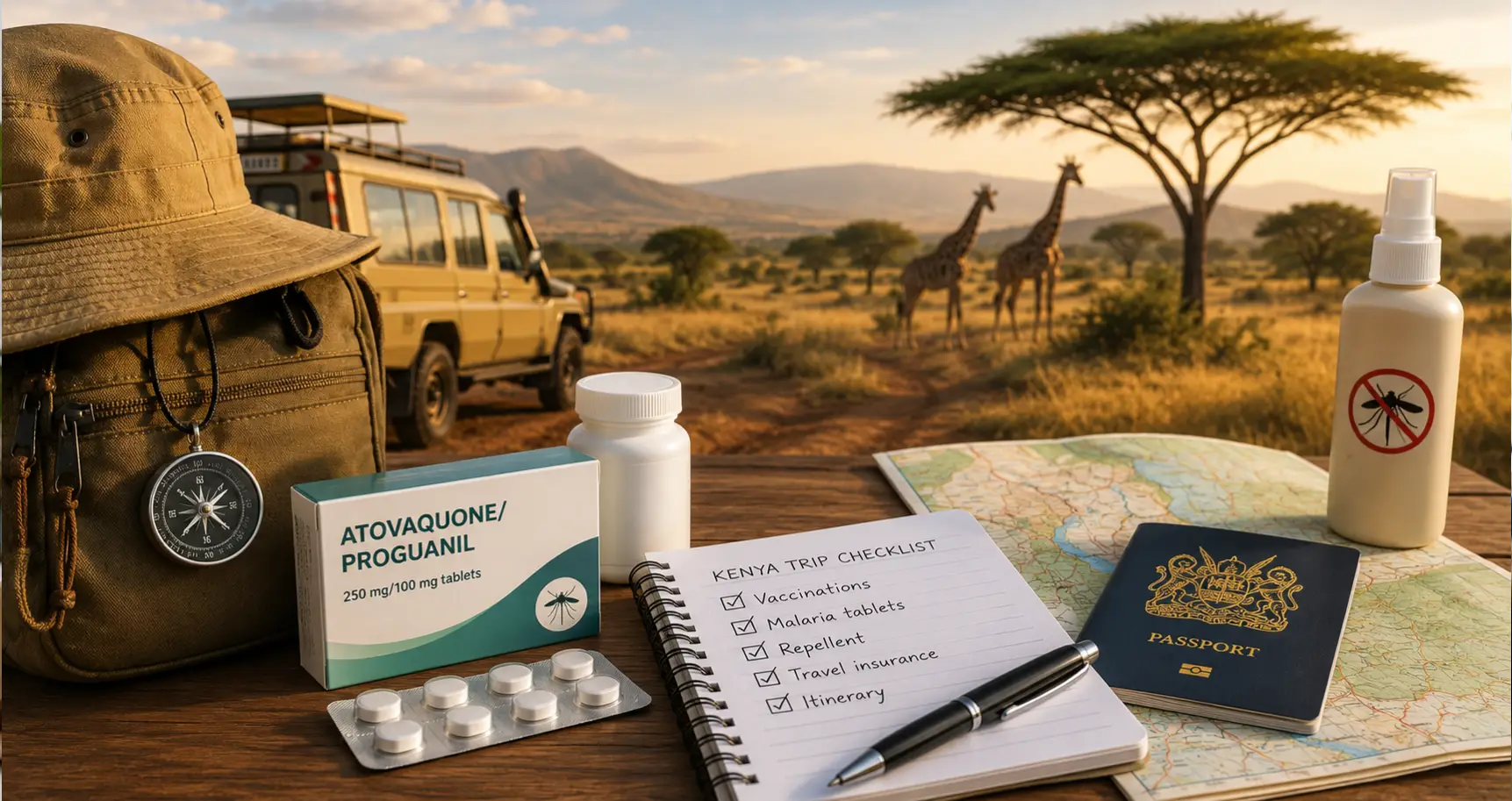
Malarone is a brand of atovaquone/proguanil; a clinician or pharmacist may supply an equivalent generic product instead. Atovaquone/proguanil and doxycycline are both taken daily, usually beginning one to two days before entering a malaria-risk area. The major practical difference is what happens after exposure: atovaquone/proguanil continues for seven days, while doxycycline continues for four weeks.
Before comparing tablets, check whether antimalarial chemoprophylaxis is advised for every overnight stop and side trip. Start with the TravelJabs4U malaria tablets UK guide and destination vaccine guide, then arrange an individual malaria risk assessment. No tablet is completely protective, and the assessment must consider age, weight, pregnancy or breastfeeding, kidney and liver health, current medicines and the likelihood that you can finish the whole course
Malarone vs Doxycycline: Quick Comparison
The table below is a decision aid for adults, not a prescribing tool. It assumes that current destination guidance lists both options as appropriate. A different medicine—or no chemoprophylaxis—may be advised for your route.
| Comparison point | Atovaquone/proguanil (Malarone) | Doxycycline |
| Medicine | Atovaquone/proguanil, including the Malarone brand or an equivalent generic product. | Doxycycline 100 mg for malaria prophylaxis. |
| How often | Once daily. | Once daily. |
| When to start | Usually 1–2 days before entering the malaria-risk area. | Usually 1–2 days before entering the malaria-risk area. |
| After leaving risk area | Continue for 7 days. | Continue for 4 weeks. |
| How to take | With food or a milky drink, at the same time each day. | With plenty of fluid while sitting or standing; do not lie down for at least 1 hour. Food or milk may help gastric irritation. |
| Common practical issues | Headache, abdominal pain, nausea, vomiting or diarrhoea can occur. Vomiting can affect dosing and absorption. | Stomach or oesophageal irritation, nausea, photosensitivity and candidiasis can occur. |
| Important suitability flags | Avoid for prophylaxis with severe renal impairment; review pregnancy, breastfeeding and interacting medicines carefully. | Unsuitable under 12 in current UK guidance; generally avoided in pregnancy; review sun exposure, oesophageal problems and interacting medicines. |
| Trip-fit consideration | May be practical for shorter exposure because the post-travel course is 7 days, if clinically suitable. | May be considered when a lower unit-cost option and a longer 4-week post-travel course are acceptable, if clinically suitable. |
| Cost comparison | Often fewer post-travel tablets, but unit and pack prices vary by provider. | Unit price may be lower, but the 4-week post-travel period increases the total capsule count. |
For current price and access information, use the malaria pills price and consultation page. Compare the total course required for your itinerary, including pre-travel and post-travel doses, and confirm whether the quote includes an assessment, prescription or supply fee. A per-tablet or weekly figure cannot show the complete cost by itself.
Which Option May Be More Practical for a Short Trip?
Atovaquone/proguanil is often considered when the shorter post-travel period matters. For example, a traveller spending seven days in a malaria-risk area would usually continue atovaquone/proguanil for seven days after leaving, whereas doxycycline would continue for four weeks. That can make the overall course shorter and may reduce the number of doses that must be remembered after returning home.
This does not make Malarone automatically “better”. It must be suitable for the destination and the traveller. Severe renal impairment is a contraindication for prophylaxis, and vomiting, diarrhoea, pregnancy, breastfeeding and interacting medicines can change the decision. Atovaquone/proguanil should be taken with food or a milky drink to support absorption, and a repeat dose is advised by the product information if vomiting occurs within one hour.
A branded product is not clinically superior simply because it carries the Malarone name. Equivalent generic atovaquone/proguanil products contain the same active ingredients and strengths, although excipients, pack sizes, availability and price can differ.
Which Option May Suit a Longer Trip or a Cost-Conscious Traveller?
Doxycycline may have a lower unit cost at some clinics and can be appropriate for longer trips when the traveller can complete a daily regimen and the four-week post-travel period. However, the total number of capsules is greater because treatment continues for 28 days after leaving the risk area. A low per-capsule price does not always translate into the lowest complete-course price.
The practical routine matters. Doxycycline should be swallowed with plenty of fluid while sitting or standing, and you should not lie down for at least one hour afterwards. This helps reduce oesophageal irritation and ulceration. It can also increase sensitivity to sunlight, which may be important for beach holidays, outdoor work, trekking or other trips with high ultraviolet exposure.
Doxycycline absorption can be impaired by antacids and products containing aluminium, calcium, magnesium, iron, zinc or bismuth. The doses need to be separated as instructed by the prescriber or pharmacist. Current medicines—including warfarin, carbamazepine, phenytoin, ciclosporin and systemic retinoids—must be disclosed during the assessment.
Malarone and Doxycycline Side Effects
All malaria-prevention medicines can cause side effects, and individual experience is unpredictable. A comparison should focus on the type of effect, your health history and whether you can follow the administration instructions—not on online anecdotes.
Atovaquone/Proguanil Side Effects
The Malarone product information lists headache, abdominal pain and diarrhoea among the most commonly reported effects during malaria prophylaxis. Nausea, vomiting, insomnia, dizziness, rash and abnormal dreams can also occur. Severe allergic or serious skin reactions are uncommon but require urgent medical attention.
Vomiting and diarrhoea deserve particular attention because they may reduce absorption. Follow the instructions supplied with the exact product and seek advice if vomiting, significant diarrhoea or missed doses could have interrupted protection.
Doxycycline Side Effects
Doxycycline can cause nausea, indigestion, gastritis, oesophagitis, oesophageal ulceration, diarrhoea, rash and photosensitivity. It may also predispose some people to Candida infection. Taking it correctly—with plenty of fluid, upright and not immediately before bed—reduces but does not eliminate the risk of oesophageal injury.
Photosensitivity can resemble an exaggerated sunburn reaction. Use effective sun protection and seek medical advice if a significant skin reaction develops. Severe headache with visual disturbance, a serious rash, difficulty swallowing, a severe allergic reaction or persistent diarrhoea needs prompt assessment.
Pregnancy, Breastfeeding, Children and Medical Conditions
Pregnancy increases the risk of severe malaria. Travellers who are pregnant or planning pregnancy should avoid malaria-risk travel where possible and obtain specialist advice when travel is essential. Doxycycline is generally avoided for prophylaxis in pregnancy. Atovaquone/proguanil is not routinely advised because pregnancy data are limited, although current UK expert guidance allows specialist consideration when no appropriate alternative exists.
Breastfeeding also requires individual advice. The medicine taken by the mother does not provide adequate malaria protection for the infant, so a child needs a separate age- and weight-appropriate plan. Current UK guidance prefers other options where possible for both doxycycline and atovaquone/proguanil during breastfeeding.
Doxycycline is unsuitable for children under 12 under current UK malaria guidance. Atovaquone/proguanil can be used in children with weight-based paediatric dosing, but adult-strength tablets are not the default for people below the adult weight threshold. Never split, combine or improvise doses without professional instructions.
Atovaquone/proguanil should not be used for prophylaxis when kidney function is severely impaired. Doxycycline may be usable in renal impairment but needs caution in liver disease and with several medicines. People with complex conditions, multiple medicines, immune suppression or no functioning spleen need a careful risk assessment.
Do You Need Malarone or Doxycycline for Thailand?
Not every traveller to Thailand needs malaria tablets. Current advice depends on the provinces and border areas visited, rural or forest exposure, season, overnight accommodation and personal risk factors. Several major cities and popular islands have no malaria risk, while chemoprophylaxis may be discussed for particular forested border areas.
Do not choose Malarone or doxycycline simply because Thailand is in Southeast Asia. Check the full route, including side trips and border crossings. The Thailand vaccination guide should own the country-specific recommendation; this article only explains how the two medicines differ when both are valid options for the identified risk area.
How to Compare the Full Course and Cost
Ask for the complete quantity and price after your route has been assessed. The calculation should include the days before entering the risk area, every day in that area, and the required period afterwards. It should also identify any consultation, prescription, delivery or dispensing fee and whether the quote is for a brand or generic product.
A traveller in a risk area for 10 days may need roughly 19 daily atovaquone/proguanil doses when the normal lead-in and seven-day post-travel period are included, compared with roughly 40 doxycycline doses when the four-week post-travel period is included. This is an illustration of course length, not a prescription or exact pack calculation; entry and exit times, product instructions and clinician advice determine the actual quantity.
Prices differ between participating clinics and pharmacies, and a price from one listing must not be presented as a network-wide TravelJabs4U price. The correct comparison is the total clinically suitable course—not “cheapest Malarone” versus a doxycycline weekly headline.
How to Take Malaria Tablets Correctly
Whichever medicine is supplied, adherence is essential. Take each dose at the instructed time, continue throughout exposure and finish the full post-travel period. Do not stop when you leave the airport or return to the UK.
· Atovaquone/proguanil: take with food or a milky drink at the same time each day and follow the product instructions after vomiting.
· Doxycycline: take with plenty of fluid while upright, avoid lying down for at least one hour, and separate interacting antacids or mineral supplements as advised.
· Keep enough medicine for delays or itinerary changes and store it according to the pack instructions.
· Ask what to do after a missed dose before departure, so you have a clear plan while abroad.
· Do not switch between medicines or combine courses without professional advice.
If side effects make you consider stopping, seek advice promptly. UK guidance warns that incomplete post-travel prophylaxis increases malaria risk. A replacement plan depends on the medicine, timing, destination and remaining exposure.
Mosquito-Bite Prevention Still Matters
Neither medicine is 100% effective. Combine the prescribed course with bite prevention throughout the malaria-risk period: use an effective repellent, wear loose long sleeves and trousers from dusk to dawn, choose screened or air-conditioned accommodation where possible, and use an insecticide-treated mosquito net when sleeping areas are not adequately protected.
Continue bite precautions even where malaria tablets are not advised, because dengue, chikungunya, Japanese encephalitis and other mosquito-borne infections may still occur. Tablets prevent malaria; they do not repel mosquitoes.
Fever During or After Travel
Malaria can become severe quickly. Seek urgent medical advice for fever, chills, sweats, headache, muscle aches, vomiting or flu-like illness during travel or after returning from a malaria-risk area. Tell the healthcare professional exactly where and when you travelled, even if you took every dose correctly.
Current UK guidance says possible malaria within a year of return must be taken seriously and may require a same-day blood test. Taking Malarone or doxycycline reduces risk but does not rule out malaria.
Book a Malaria Risk Assessment
A malaria risk assessment confirms whether tablets are recommended for your exact route and, if so, which options are clinically suitable. Bring every country, region, overnight stop and travel date, plus your age and weight, pregnancy or breastfeeding information, medical conditions, allergies, current medicines and supplements, and previous antimalarial reactions.
TravelJabs4U can help you find a participating clinic and book a malaria risk assessment. The clinic or pharmacy providing the assessment is responsible for the final recommendation, supply route, availability and complete-course price. A booking does not guarantee that Malarone, generic atovaquone/proguanil or doxycycline will be supplied.
Conclusion
In the Malarone vs doxycycline decision, neither medicine is universally best. Atovaquone/proguanil has a seven-day post-travel course and must be taken with food or a milky drink; doxycycline has a four-week post-travel course, can cause photosensitivity and must be taken upright with plenty of fluid. Their contraindications and interactions also differ.
Confirm that malaria tablets are advised for your exact route before comparing convenience or cost. Then compare the complete course, disclose your medical history and medicines, use mosquito-bite precautions and finish every dose as instructed. Seek urgent medical help for possible malaria symptoms during travel or within a year of return.
Written by the TravelJabs4U Editorial Team. Clinical review required before publication. After genuine sign-off, display: Medically reviewed by Mohammed Shajan Ali, MPharm, GPhC-registered pharmacist (GPhC No. 2067785). Last reviewed: ADD ACTUAL CLINICAL SIGN-OFF DATE BEFORE PUBLICATION.
Frequently Asked Questions
Which is better, Malarone or doxycycline?
Neither is better for everyone. The correct option depends on the malaria risk at your exact destination, course length, age and weight, pregnancy or breastfeeding, kidney and liver health, current medicines, side-effect risks and your ability to complete the regimen.
How long do you take Malarone compared with doxycycline?
Both are usually started one to two days before entering a malaria-risk area and taken daily during exposure. Atovaquone/proguanil is continued for seven days after leaving; doxycycline is continued for four weeks.
Does doxycycline cause more sun sensitivity than Malarone?
Doxycycline is well known to cause photosensitivity in some people and may produce an exaggerated sunburn reaction. Atovaquone/proguanil can also rarely cause photosensitivity, but sun sensitivity is a more prominent practical consideration with doxycycline.
Should Malarone and doxycycline be taken with food?
Atovaquone/proguanil should be taken with food or a milky drink to support absorption. Doxycycline may be taken with food or milk if it irritates the stomach, but it must be swallowed with plenty of fluid while upright and not immediately before lying down.
Can I take Malarone or doxycycline during pregnancy?
Do not self-select either medicine during pregnancy. Doxycycline is generally avoided for malaria prophylaxis, while atovaquone/proguanil is not routinely advised because data are limited. Specialist advice is required when malaria-risk travel is essential.
Which is cheaper, Malarone or doxycycline?
Doxycycline may have a lower unit cost, but it continues for four weeks after travel and therefore requires more capsules. Atovaquone/proguanil often has a higher unit price but a seven-day post-travel course. Compare complete-course quotes, including consultation and supply fees.
Do I need Malarone or doxycycline for Thailand?
Not for every Thailand itinerary. Risk is concentrated in particular rural forested border areas, while several major cities and islands have no malaria risk. Check the exact route and current destination guidance before choosing any tablet.
Can children take Malarone or doxycycline?
Doxycycline is unsuitable for children under 12 under current UK malaria guidance. Atovaquone/proguanil may be used in children with weight-based paediatric dosing. A clinician must confirm the product and dose.
What should I do if I get side effects or a fever?
Seek advice promptly for severe, persistent or worrying side effects and do not switch medicines without maintaining appropriate protection. Fever or flu-like illness during travel or within a year of return from a malaria-risk area needs urgent medical assessment and may require a same-day malaria test.
Disclaimer
This page provides general travel-health information and is not an individual malaria risk assessment or prescribing decision. Malaria recommendations, resistance patterns, medicine licensing, product information, prices, availability and service terms can change. Advice depends on the exact country and region, season, altitude, overnight stops, trip duration, age and weight, pregnancy or breastfeeding, kidney and liver function, medical history, allergies, current medicines and previous antimalarial reactions. Follow the advice of a qualified clinician or pharmacist and the patient information supplied with the exact medicine. Seek urgent medical help for fever or other possible malaria symptoms during travel or within a year of return.