Qdenga can reduce the risk of dengue illness and hospitalisation, but it does not provide 100% protection and there is no single effectiveness percentage that can predict what will happen to an individual traveller. UK guidance mainly considers dengue vaccination for selected people with previous dengue infection, and the result of a travel-health assessment still depends on your history and itinerary. For the wider eligibility and service context, see the dengue fever vaccine in the UK page.
The most useful way to read Qdenga effectiveness data is to treat it as evidence about how groups of vaccinated people performed compared with unvaccinated groups in clinical studies. Those figures help clinicians and guideline bodies assess benefit, but they are not a promise that one vaccinated person will avoid infection on a particular trip.
How does Qdenga work?
Qdenga is a live attenuated tetravalent dengue vaccine. “Live attenuated” means it uses weakened dengue viruses, and “tetravalent” means it is designed to stimulate immune responses against all four dengue virus serotypes: DENV-1, DENV-2, DENV-3 and DENV-4.
The vaccine is intended to train the immune system to recognise dengue more quickly if exposure happens later. That does not create an impenetrable barrier against infection. As with other vaccines, the immune response can differ between people and the level of protection seen in studies can vary according to what outcome is measured and which group is being studied.
How effective is the dengue vaccine?
The UK Green Book summarises trial evidence for two Qdenga doses given three months apart in people with evidence of previous dengue infection. In that trial setting, vaccine efficacy was 65% against virologically confirmed dengue and 86% against dengue requiring hospitalisation.
Those numbers need context. “65% efficacy” does not mean that every vaccinated traveller is 65% protected, nor does it mean that 35% of vaccinated people will definitely get dengue. Vaccine efficacy is a relative comparison between vaccinated and control groups under the conditions of the study.
You may also see different Qdenga percentages in product information or research summaries. That can happen because analyses use different follow-up periods, endpoints, baseline dengue status and virus serotypes. A figure for preventing any confirmed dengue is not the same measure as a figure for preventing hospitalisation.
Why Qdenga effectiveness is not one fixed number
Several factors make a single headline percentage misleading for an individual traveller:
- Previous dengue infection: UK recommendations place particular weight on evidence of past dengue. Vaccine performance and the benefit-risk discussion differ according to baseline dengue status.
- Dengue serotype: the four dengue serotypes are biologically distinct, and trial efficacy was not identical for each serotype.
- Age and study population: the pivotal efficacy study in the current UK product information enrolled children and adolescents aged 4 to 16 years in dengue-endemic countries. Clinical efficacy for people aged 17 and over is inferred from immune-response data rather than a separate adult efficacy trial.
- Time since vaccination: exploratory analyses have followed protection for several years, but protection is not described as a permanent fixed percentage.
- Exposure during travel: destination, season, length of stay and intensity of mosquito exposure change your chance of encountering dengue. They do not alter a trial percentage, but they do change your overall travel risk.
For a traveller, the practical question is therefore not simply “What percentage effective is it?” A clinician needs to combine the vaccine evidence with your previous dengue history and the risk of exposure on the actual trip.
How soon after Qdenga does protection develop?
UK travel-health guidance states that protection starts around 14 days after the first Qdenga dose. The licensed primary course is still two doses, with the second dose given three months after the first. Early protection should not be treated as complete or guaranteed protection for a specific departure date. For the full schedule and travel-planning detail, read the separate guide to Qdenga before travel.
The product information also reports evidence of early protection between the first and second doses. Even so, the recommended two-dose primary course remains important, and the decision to vaccinate should be made through an individual risk assessment rather than by counting days from the first injection alone.
Can you still get dengue after vaccination?
Yes. No dengue vaccine provides complete protection in every recipient against every dengue serotype. Breakthrough infection can occur, which is why vaccination should reduce risk rather than be understood as making dengue impossible.
If you develop a fever or other symptoms that could be dengue during or after travel, seek medical advice and tell the healthcare professional where you have been. Being vaccinated should not be used to rule dengue out without clinical assessment.
Why mosquito-bite prevention still matters
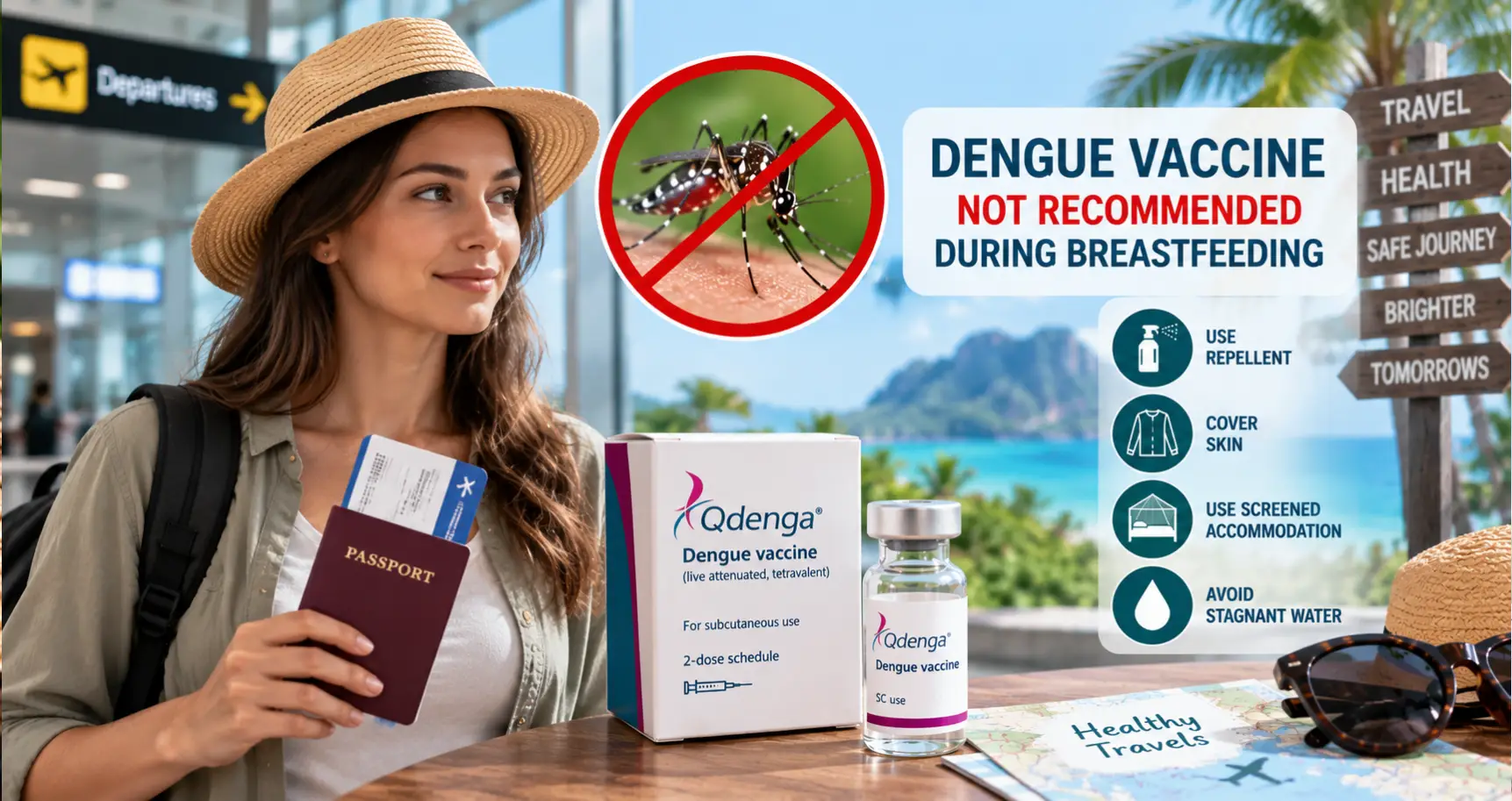
Dengue is spread by Aedes mosquitoes, which commonly bite during the day. Vaccination does not replace measures that reduce the chance of being bitten. These precautions also help reduce exposure to other mosquito-borne infections for which Qdenga provides no protection.
- Use a suitable insect repellent and reapply it as directed.
- Wear clothing that covers exposed skin where practical.
- Use screened or air-conditioned accommodation when available.
- Use mosquito nets where appropriate, including for daytime sleep if the room is not well screened.
- Reduce mosquito breeding around accommodation by avoiding open containers of standing water where this is within your control.
Before travel, check dengue risk by destination because current risk and outbreak information can differ by country and region.
When might another review or booster question arise?
Current UK product information states that the need for a booster dose has not been established, and the Green Book says there are currently no data setting the need or timing for a reinforcing third dose. That means there is no routine timetable that can be applied to everyone after the standard two-dose course.
A fresh travel-health review can still be useful if you are travelling again after a long interval, your previous vaccine record is uncertain, your health has changed, or official recommendations have been updated. The purpose of that review is to reassess current evidence and travel risk, not to assume that another dose is automatically required.
What should you do with an effectiveness percentage?
Use it as one part of the evidence, not as a personal forecast. A useful interpretation is: Qdenga has demonstrated meaningful protection in clinical studies, particularly against hospitalised dengue in previously infected participants, but protection varies and is incomplete. Your own risk depends on whether vaccination is appropriate for you, the dengue risk at your destination and how well you can reduce mosquito exposure.
If you are considering dengue vaccination, bring any evidence of previous dengue infection and your travel plans to a travel-health assessment. The selected clinic or pharmacy is responsible for deciding whether Qdenga is clinically appropriate and for confirming its own service availability.
Frequently asked questions
How effective is dengue vaccination?
There is no single percentage that predicts an individual traveller’s protection. The UK Green Book summarises trial data in people with evidence of previous dengue infection as 65% vaccine efficacy against virologically confirmed dengue and 86% against hospitalised dengue after a two-dose Qdenga course. Trial results vary by endpoint, prior infection, serotype and follow-up period, and they do not guarantee that a vaccinated person will not catch dengue.
How soon after vaccination am I protected?
UK travel-health guidance states that protection starts around 14 days after the first Qdenga dose. The licensed primary course still consists of two doses given three months apart, and early protection should not be treated as complete or guaranteed protection for a particular trip.
Can I still get the infection after vaccination?
Yes. Qdenga reduces risk but does not provide 100% protection, and vaccine performance varies by dengue serotype and other factors. If you are exposed, infection can still occur, so seek medical advice if you develop symptoms during or after travel and tell the clinician where you have been.
Do I need other precautions if I am vaccinated?
Yes. Mosquito-bite prevention remains important even after dengue vaccination. Use a suitable insect repellent, cover exposed skin where practical and use screened or air-conditioned accommodation or mosquito nets where appropriate, especially because the mosquitoes that spread dengue commonly bite during the day.
Disclaimer
This page provides general UK travel-health information and does not replace an individual clinical assessment. Dengue risk, vaccine recommendations and official guidance can change. Qdenga is not suitable for every traveller, and vaccination does not guarantee protection from dengue. Continue mosquito-bite precautions even if vaccinated and seek medical advice if you become unwell during or after travel.
Next step
For broad Qdenga eligibility and service information, read the Dengue Fever Vaccine UK: Cost, Eligibility and Booking page. If an individual assessment is appropriate, use the TravelJabs4U clinic directory to find a listed provider and confirm current availability directly with that clinic.