Malaria occurs in Pakistan, but the level of risk varies by altitude and personal mosquito exposure. Current UK guidance classifies risk as low below 2,000 metres and very low above that height. A low-risk classification does not mean malaria infection is impossible.
For most travellers, preventing mosquito bites and knowing when to seek medical help matter more than taking malaria tablets automatically. This article explains how place, season and individual circumstances influence malaria exposure, and what UK travellers should consider before and after visiting Pakistan.
At a glance
| Malaria risk | Mosquito precautions | Prevention tablets |
| Low below 2,000m; very low above 2,000m | Use effective repellent and mosquito-protected accommodation | Not routinely required for all; seek individual advice |
Is There a Malaria Risk in Pakistan?
Yes. Malaria occurs in Pakistan, with low risk below 2,000 metres and very low risk above that altitude under current UK travel-health guidance.
The practical decision depends on the places where you will sleep, the season, how much time you spend outdoors and your medical circumstances. “Low risk” does not mean that infection is impossible. UK guidance therefore emphasises recognising the risk and preventing mosquito bites rather than giving the same advice to every visitor.
What Causes Malaria in Pakistan?
Malaria is an infection caused by Plasmodium parasites transmitted through the bite of an infected female Anopheles mosquito.
Plasmodium vivax and Plasmodium falciparum are both important causes of malaria in Pakistan. An infected mosquito passes the parasite to a person when it feeds. The illness is not spread through normal contact such as sharing a room, a meal or a handshake.
Is Pakistan Considered a High-Risk Malaria Country?
No. Current UK guidance does not classify Pakistan as a high-risk malaria destination overall, although infections can still occur.
This country-level label is a starting point, not a personal guarantee. A short city stay with screened accommodation may create different exposure from weeks spent outdoors or overnight in rural settings. If public-health conditions change, clinicians should consult the most recent TravelHealthPro advice rather than relying on an old country summary.
Can You Get Malaria After Only One Mosquito Bite?
Yes. One bite from a mosquito carrying malaria parasites can transmit infection, although most mosquito bites do not cause malaria.
The number of mosquitoes you encounter, whether they carry parasites and how effectively you prevent bites all affect exposure. This is why even people making a brief visit should know how to protect themselves.
Which Areas of Pakistan Have a Malaria Risk?
UK guidance describes low malaria risk in Pakistan below 2,000 metres and very low risk above 2,000 metres.
This broad altitude distinction is more reliable for UK travel planning than treating an entire province or city as either “safe” or “dangerous”. It also means that a northern trekking itinerary may include lower-altitude stops with a different assessment from the final high-elevation destination.
| Location or itinerary | How to interpret the risk |
| Below 2,000 metres | Low malaria risk; use mosquito-bite precautions. |
| Above 2,000 metres | Very low malaria risk; bite precautions still matter. |
| Karachi, Lahore or Islamabad | Assess the exact route, accommodation and outdoor exposure; do not infer zero risk. |
| Rural or agricultural stays | Exposure can vary by sleeping arrangements, season and local mosquito conditions. |
| Northern trekking itineraries | Check the elevation of valleys, overnight stops and travel between locations. |
Is There a Malaria Risk in Karachi, Lahore or Islamabad?
Travellers to Karachi, Lahore or Islamabad should not assume zero malaria risk simply because they are staying in a major city.
A city visit may involve hotels with screened windows and air conditioning, but some journeys also include family homes, outskirts, day trips and rural overnight stays. Record where you will actually spend each night. The published UK country guidance does not provide a blanket malaria-free exemption for these cities.
Is Malaria More Likely in Rural Areas of Pakistan?
Rural accommodation and outdoor activities may increase opportunities for mosquito bites, depending on local conditions.
Travellers staying with relatives, working outdoors or sleeping in buildings without effective screens may encounter different mosquito exposure from visitors spending most nights indoors. These practical differences matter more to an individual assessment than describing every rural district as uniformly high risk.
Does Altitude Affect Malaria Risk in Northern Pakistan?
Yes. The UK malaria risk category is very low above 2,000 metres, but lower-altitude valleys and overnight stops still need consideration.
A trip advertised as a mountain trek can begin in towns or valleys well below the altitude of the main route. Include the full journey when discussing malaria exposure, not just the highest elevation reached. Altitude illness is a separate travel-health issue.
Does Very Low Risk Mean Mosquito Protection Is Unnecessary?
No. Very low malaria risk does not mean that mosquito-bite precautions should stop.
Other mosquito-borne infections may also be relevant, and bite avoidance is useful even where malaria transmission is uncommon. Follow practical repellent, clothing and accommodation advice throughout your trip.
Does Malaria Risk in Pakistan Change by Season?
Yes. Malaria transmission can vary with rainfall, temperature, mosquito populations and local environmental conditions.
A month of travel alone cannot tell you whether antimalarial medicine is appropriate. The country-level UK recommendation still needs to be applied to your own route, and recent local alerts can alter the picture, especially after unusual weather.
Is Malaria Risk Higher During Pakistan’s Monsoon Season?
Rainfall can create breeding habitats for mosquitoes and influence malaria transmission, although the effect varies by location and year.
Monsoon conditions do not create an identical level of risk across Pakistan. Travellers should check their accommodation and planned activities, particularly where standing water and outdoor evening exposure are likely.
Can Flooding Increase Mosquito-Borne Disease Risks?
Yes. Flooding can change mosquito habitats and disrupt living conditions, potentially increasing exposure in affected communities.
That does not justify assuming a current outbreak in every flood-affected area. Where flooding has occurred, check current official health notices and whether disruption may limit access to medical care. Any temporary prevention recommendation should be checked against the latest UK guidance.
Is Malaria Present in Pakistan Throughout the Year?
Malaria transmission can occur in Pakistan at different times of year, although its intensity and geographic distribution vary.
Weather, location, local control measures and personal exposure all influence risk. A winter trip should not automatically be treated as malaria-free, nor should a summer trip automatically trigger a preventive prescription.
Do UK Travellers Need Malaria Tablets for Pakistan?
No. Malaria prevention tablets are not routinely recommended for every UK traveller to Pakistan, though they may be considered in exceptional cases after assessment.
TravelHealthPro prioritises awareness and bite avoidance in Pakistan’s low- and very-low-risk areas. Some travellers have a greater chance of severe illness or prolonged exposure; for them, a clinician may consider whether the benefits of antimalarial medicine outweigh its limitations and risks.
Are Antimalarial Tablets Recommended for Everyone?
No. A blanket prescription for everyone visiting Pakistan is not supported by current UK country guidance.
Taking medicine unnecessarily creates avoidable side-effect and interaction risks. The decision starts with the travel itinerary and the traveller’s health, rather than a country name or a medicine advertised online.
Who May Need an Individual Antimalarial Assessment?
Travellers with greater exposure or vulnerability to severe malaria need advice matched to their specific circumstances.
This includes some people visiting friends or relatives for extended periods, pregnant travellers, infants and young children, immunosuppressed people, older adults and those with complex conditions. Travellers without a functioning spleen need particularly careful specialist planning; TravelHealthPro advises against travel to malaria-risk areas where possible.
Which Malaria Tablets Might Be Considered?
Atovaquone/proguanil, doxycycline or mefloquine may be considered for selected travellers to Pakistan’s low-risk areas when a professional assessment supports their use.
These medicines have different suitability checks and schedules; none should be selected from a destination name alone. The malaria tablets UK information page explains the medicine differences, while a clinician determines whether any option is appropriate for the individual traveller.
Can Tablets Replace Mosquito-Bite Prevention?
No. Malaria tablets do not offer complete protection and must not replace practical measures to avoid mosquito bites.
Even when medicine is recommended and taken correctly, a traveller can develop malaria. Reducing bites and recognising symptoms remain essential parts of prevention.
How Can Travellers Prevent Malaria in Pakistan?
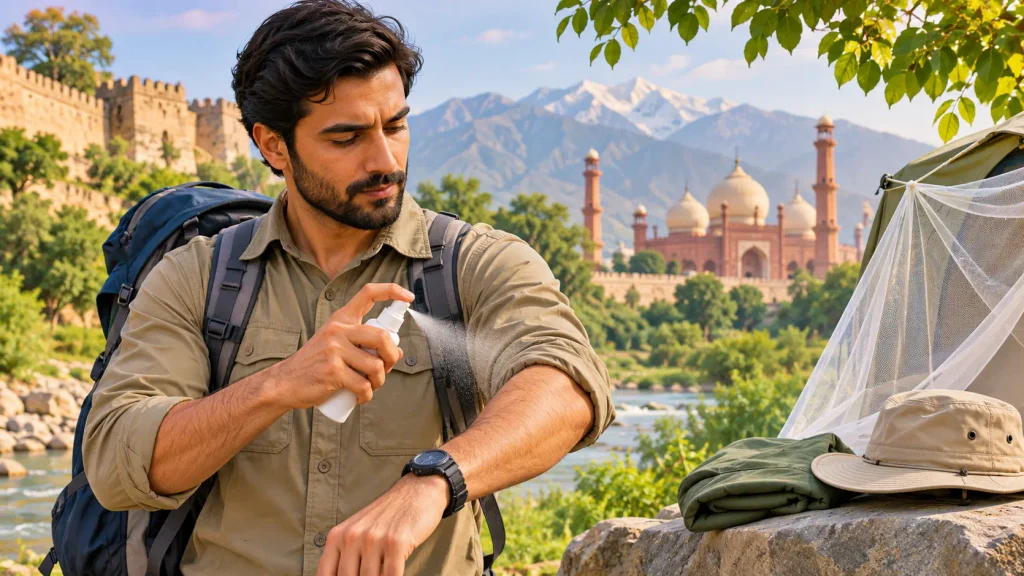
Travellers can reduce their risk of malaria by using effective insect repellent, covering exposed skin and choosing mosquito-protected accommodation.
These measures are useful whether or not preventive tablets are advised. Prepare before leaving the UK so protection does not depend on finding a suitable product after arrival.
- Apply an effective mosquito repellent to exposed skin according to its instructions, and reapply as needed.
- Wear long sleeves, trousers and socks during peak biting periods where practical.
- Use screened windows, appropriately maintained air conditioning or an insecticide-treated bed net when needed.
- Keep bedroom doors and windows screened and avoid leaving mosquito entry points open overnight.
What Mosquito Repellent Should You Use?
An effective repellent containing DEET or another recommended active ingredient can reduce mosquito bites when used correctly.
UKMEAG recommends 50% DEET as a first-choice repellent for malaria prevention, with suitable alternatives when DEET is not tolerated or preferred. Follow age-specific product and professional instructions, apply enough to cover exposed skin and reapply after heavy sweating or according to the label.
Do Mosquito Nets and Screened Rooms Help?
Yes. Insecticide-treated nets, screened rooms and properly maintained air conditioning can reduce nighttime mosquito exposure.
This is particularly useful for rural stays, family visits and accommodation where windows cannot be kept effectively screened. Check sleeping arrangements before departure where possible.
When Are Malaria Mosquitoes Most Active?
Mosquitoes that transmit malaria bite mainly between dusk and dawn, although their activity can extend beyond those hours.
Pay particular attention to evening meals outdoors, overnight stays and early-morning activities. Prevention needs to match when mosquitoes are active, not simply when travellers notice them.
Should Travellers Avoid Daytime Mosquito Bites Too?
Yes. Daytime bite avoidance matters because mosquitoes that spread illnesses such as dengue can bite during daylight hours.
Malaria and dengue have different transmission patterns, so prevention should not stop after sunrise. The question of whether a dengue fever vaccine is recommended for Pakistan travel is separate from routine bite prevention and needs its own clinical assessment.
Who Faces Greater Malaria-Related Risks in Pakistan?
Pregnant travellers, young children and people with certain medical conditions may face a greater risk of serious malaria complications.
An individual risk assessment looks at both the likelihood of encountering infected mosquitoes and the possible consequences of illness. A low-risk destination category can still require a more cautious approach for some people.
Do UK Visitors Staying With Friends or Relatives Have Extra Exposure?
They may. Longer trips and family accommodation can create different mosquito exposure from short hotel-based visits.
Visiting friends and relatives often involves neighbourhoods, homes and activities not covered by a standard tourist itinerary. People who once lived in Pakistan should not assume that past exposure gives lasting immunity after years in the UK.
Is Malaria More Dangerous During Pregnancy?
Yes. Malaria during pregnancy can be serious for both the pregnant person and the baby, making specialist pre-travel advice important.
Pregnancy also changes which preventive medicines may be appropriate. Do not start or substitute an antimalarial without professional advice. Where travel is unavoidable, an individual plan for bite protection and prompt care is essential.
Do Children and Older Travellers Need Special Precautions?
Yes. Young children and some older travellers need malaria advice that takes account of their health, exposure and ability to use preventive measures.
Children may need extra support with repellent, covered clothing and bed nets. Some older adults or people taking multiple medicines may also require closer checks for interactions and other clinical risks.
What Are the Symptoms of Malaria After Travelling to Pakistan?
Malaria can cause fever, chills, headache, muscle aches and other flu-like symptoms during a trip or after returning to the UK.
Nausea, vomiting, fatigue and diarrhoea can also occur. These symptoms are not specific to malaria, so testing and clinical assessment are important. Never assume a fever is harmless merely because you took precautions.
How Soon Can Symptoms Appear After Infection?
Malaria symptoms can begin within days or weeks of infection, and some infections can appear months after travel.
TravelHealthPro advises travellers to remain alert to symptoms for up to a year after exposure. Remembering the dates and locations of overseas travel can help a clinician decide which tests are needed.
When Should You Seek Medical Help?
Seek urgent medical advice for fever or possible malaria symptoms during or after travel to a malaria-risk area, and explain where you have travelled.
If you are in the UK and had malaria exposure within the past 12 months, arrange an urgent GP appointment or contact NHS 111. Seek help during the trip rather than waiting for your return. Severe illness or emergency symptoms require emergency services.
Can Tablets Rule Out Malaria if You Become Ill?
No. Malaria can still occur even when preventive tablets were taken correctly.
Make sure the clinician knows about your trip, your mosquito exposure and any preventive medicine used. This information can help avoid delays in diagnosis.
How Should UK Travellers Prepare Before Visiting Pakistan?
Review your route, elevations, overnight accommodation, travel dates and medical background before choosing malaria precautions.
The most useful preparation is a complete itinerary rather than a list of cities alone. A travel-health assessment can bring malaria prevention together with vaccinations and other destination-specific health issues.
What Should You Bring to a Travel-Health Assessment?
Bring your travel dates, planned overnight locations, activities and relevant medical and vaccination history.
Include medicines, allergies, pregnancy or breastfeeding information and any conditions that affect immunity. The wider travel vaccinations for Pakistan page covers routine and selective vaccinations alongside general preparation for the country.
When Should You Arrange Pre-Travel Advice?

Ideally arrange pre-travel health advice four to six weeks before departure, although an appointment closer to travel can still be useful.
This gives time to review your route, discuss vaccines and decide whether malaria medicines should be considered. People with complex medical needs should seek advice earlier where possible.
Should You Compare Tablet Prices Before an Assessment?
First confirm whether antimalarial medicine is needed and suitable; cost comparisons make sense only after that clinical decision.
Where tablets are recommended, the complete course cost matters more than a headline pack price. The separate malaria pills price in the UK page covers pricing considerations; individual providers must confirm current prices and availability.
Frequently Asked Questions About Malaria Risk in Pakistan
Malaria risk in Pakistan differs by elevation and individual exposure. The answers below address common UK traveller questions about prevention, tablets and symptoms.
Which areas of Pakistan have malaria?
UK guidance describes low malaria risk in areas below 2,000 metres and very low risk above that altitude. Your full itinerary and overnight stops still matter.
Is malaria common in Karachi, Lahore or Islamabad?
The UK country guidance does not declare these cities malaria-free. Assess where you will stay, outdoor exposure and any visits beyond the city.
Do I need malaria tablets for Pakistan?
Not routinely. Tablets may be considered in exceptional circumstances for certain travellers after an individual malaria risk assessment.
Is malaria risk higher in the monsoon?
Rainfall can affect mosquito breeding and transmission, but local conditions vary. Check current guidance rather than assuming the same risk everywhere.
Can I get malaria above 2,000 metres?
UK guidance describes risk above 2,000 metres as very low, not necessarily zero. Continue sensible mosquito precautions.
Is there a malaria vaccine for UK travellers visiting Pakistan?
There is currently no malaria vaccine available for routine use by travellers from the UK. Prevention relies on bite avoidance and antimalarial medicine when recommended.
How do I prevent mosquito bites in Pakistan?
Use effective insect repellent, protective clothing, mosquito-protected rooms and insecticide-treated nets when needed.
Can malaria appear after returning to the UK?
Yes. Symptoms may appear after your return, sometimes months later. Mention travel to Pakistan when seeking medical care for a fever.
What should I do if I develop a fever after visiting Pakistan?
Get urgent medical advice and explain where and when you travelled, especially if you visited a malaria-risk area within the past 12 months.
Medical Information
This page provides general UK travel-health information about malaria in Pakistan and cannot replace a personalised assessment or urgent medical care.
Malaria advice changes with outbreaks, geography, season, medical history and current UK recommendations. This page draws on TravelHealthPro Pakistan guidance, UKHSA/UKMEAG and NHS guidance. Seek prompt medical advice for possible malaria symptoms during or after travel, and speak to a qualified travel-health professional about individual prevention.
About the Author