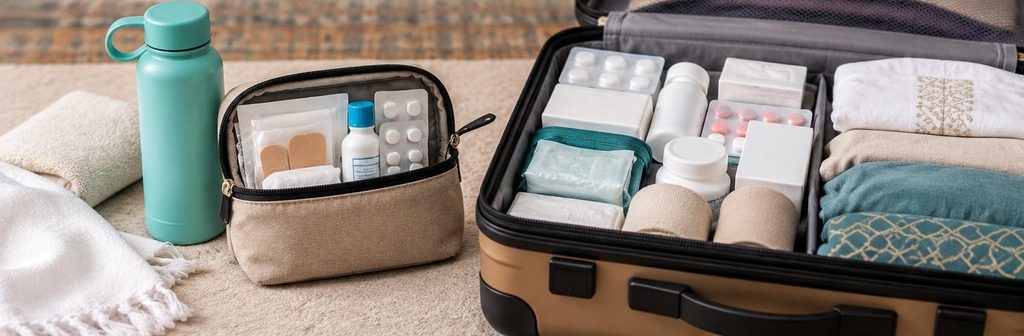
A Hajj and Umrah first aid kit should include plasters, sterile dressings, blister protection, wound-cleaning supplies, oral rehydration sachets, suitable personal medicines and important medical documents. Keep a small selection accessible during the rituals and reserve bulkier spare supplies for your luggage. The most useful kit is one that fits your own health needs, walking plans and current Saudi Arabia medicine-entry rules.
What Should You Pack in a Hajj and Umrah First Aid Kit?
Pack supplies for minor cuts, sore feet, temporary illness and your usual medical needs. Hajj and Umrah can involve long walks and busy shared spaces, so a few well-chosen items are more useful than an oversized collection of unfamiliar medicines.
Essential first aid supplies for Hajj and Umrah
A simple packing checklist is a useful starting point. The essential items for a travel first aid kit cover everyday travel problems; this pilgrimage-specific list gives extra attention to foot care, heat and medicines you may need to reach quickly.
Evidence note: TravelHealthPro advises tailoring a travel first aid kit to the individual, destination and planned activities. That is particularly relevant when personal medicines and extended walking are involved.
| Pack category | Suggested supplies | Why they may help |
| Minor cuts | Plasters, sterile gauze, non-stick dressings, medical tape, wound-cleaning supplies | Cover small cuts and protect cleaned skin. |
| Foot care | Blister plasters, padded dressings, comfortable spare socks where appropriate | Reduce friction and protect sore skin during long walks. |
| Hydration | Oral rehydration sachets, refillable water bottle | Prepare for fluid losses; suitability depends on health and circumstances. |
| Basic symptoms | A small supply of suitable, familiar over-the-counter medicines | For minor discomfort, after checking suitability with a pharmacist. |
| Personal health | Prescribed medicines, inhalers or monitoring devices as relevant | Maintain treatment for existing conditions. |
| Hygiene | Hand sanitiser, tissues, face mask | Useful where washing facilities are not immediately available. |
| Documents | Medication list, prescription details, emergency contacts, insurance and vaccine records | Help if medicines or medical care are needed. |
What should you keep in a small daily first aid pouch?
During Tawaf, Sa’i and other periods away from your accommodation, carry a few blister plasters, tissues, hand sanitiser, drinking water and the personal medicine you are likely to need during that period. A medication list and emergency contact details are especially useful if you become separated from your group.
What should stay in your main luggage?
Keep spare dressings, extra toiletries and non-urgent supplies in your suitcase or accommodation. Do not put all essential regular medication in checked luggage, as it may be delayed or lost. Keep items requiring special storage protected in line with their instructions.
| Daily pouch | Main bag / accommodation |
| Blister plasters and small wound dressing | Backup wound care and extra dressings |
| Regular medicines needed that day | Spare personal items and permitted backup medicines |
| Water and small hygiene supplies | Larger permitted toiletries and refill supplies |
| Emergency contacts/medication list | Copies of longer medical records and travel paperwork |
Which Medicines Should You Take for Hajj and Umrah?
Bring your regular prescribed treatment and consider only familiar medicines that are appropriate for minor symptoms. Ask a pharmacist or prescriber to check allergies, interactions, long-term conditions and whether any medicine is restricted in Saudi Arabia before you pack it.
Pain relief and fever medicines
Paracetamol may be suitable for some adults with minor pain or fever, but it is not appropriate for everyone and should only be used according to the product information or professional advice. Other painkillers can carry additional risks, particularly for people who are dehydrated, pregnant or taking certain regular medicines. Do not use pain relief to conceal a persistent fever or serious symptoms.
Medicines for stomach upset and travellers’ diarrhoea
Oral rehydration sachets can help replace fluid and salts lost through diarrhoea or heavy sweating. Some travellers may also consider a suitable anti-diarrhoeal medicine after advice, but a fever, bloody diarrhoea, severe abdominal pain or an inability to retain fluids calls for medical assessment. Antibiotics should not be routinely packed or taken without a clinician’s direction.
Allergy medicines and skin treatments
A pharmacist can advise whether an antihistamine or suitable skin preparation belongs in your kit. Mild irritation and insect bites are different from a serious allergic reaction; swelling affecting breathing, collapse or severe breathlessness needs emergency care. Anyone already prescribed an adrenaline auto-injector should follow their individual emergency plan.
Regular prescription medicines and medical devices
Keep medicines in their original labelled packs, with the names and doses recorded separately. If you use an inhaler, diabetes monitor, insulin, heart medication or another prescribed treatment, arrange enough supply for the trip and discuss storage and delays in advance. Never stop or alter regular treatment just to make travel packing easier without speaking to the treating clinician.
How Can You Prevent Blisters and Foot Injuries During Hajj and Umrah?
Blisters often result from rubbing and pressure during repeated walking. Well-fitting footwear, clean dry feet and a suitable dressing over vulnerable areas can reduce discomfort. Extra attention is important during Tawaf and Sa’i, and for anybody with diabetes or reduced sensation in their feet.
Which blister plasters and dressings are useful?
Carry padded plasters in a size that covers common rubbing points, plus a few soft dressings for minor grazes. Hydrocolloid blister dressings may protect a sore area and ease friction, but the choice depends on skin condition and any sign of infection. Test footwear before travelling rather than relying on dressings to compensate for a poor fit.
How should you care for a blister during pilgrimage?
Gently clean the area, keep it dry and cover it with a soft, protective dressing. Do not deliberately burst a blister or peel away its overlying skin. If pain worsens, the surrounding skin becomes hot or swollen, or there is pus, obtain clinical advice promptly.
Why do pilgrims with diabetes need additional foot precautions?
People with diabetes, poor circulation or reduced foot sensation should check their feet regularly and follow their existing foot-care plan. Even a small break in the skin can need earlier assessment than it would for someone without those risk factors. A clinician can advise on footwear and walking-related precautions before departure.
What Should You Pack to Manage Heat and Dehydration?
Take a reliable water bottle, appropriate sun protection and any individually suitable rehydration supplies. Heat exposure during pilgrimage can be serious because rituals may involve physical effort and large crowds, and drinking fluids alone is not a substitute for rest, shade and recognising danger signs.
Which hydration supplies are useful to carry?
A refillable bottle makes it easier to drink safe water throughout the day. Oral rehydration powders may be useful for fluid losses, especially alongside diarrhoea, provided they are prepared with safe water and used correctly. People with fluid or salt restrictions should seek individual advice rather than routinely increasing intake.
How can pilgrims reduce heat exposure?
Take breaks in shaded or cooler areas, adjust activities when possible and wear suitable lightweight clothing. A permitted umbrella or other shade arrangement can be helpful; consider religious rules about Ihram when choosing clothing or personal-care products. If someone feels faint or unusually hot, move them to a cooler place and act early.
What is the difference between heat exhaustion and heatstroke?
Heat exhaustion can cause dizziness, headache, sweating, weakness, cramps and nausea. Move the person to a cool place, help them cool down and give fluids if they are fully alert and able to drink. Confusion, seizures, collapse, very high temperature or failure to improve are warning signs of possible heatstroke, which is a medical emergency. A first aid kit cannot treat heatstroke.
Heat safety deserves separate preparation. heat exhaustion and dehydration during Hajj is a related topic to consider when planning walking times, rest breaks and personal medical support.
Evidence note: TravelHealthPro highlights the combined demands of long-distance walking, hot weather and crowds during pilgrimage and recommends preparing for dehydration and other travel-related illness.
How Can Pilgrims Reduce Infection Risks in Crowded Areas?
Good hand hygiene and sensible respiratory precautions help reduce avoidable illness in busy accommodation, transport and gathering areas. Carrying sanitiser or a face mask can be useful, but neither is a replacement for handwashing, staying alert to symptoms or seeking care when needed.
Should you pack face masks and hand sanitiser?
A well-fitting mask may be useful in crowded indoor settings, particularly if you have additional respiratory risk or need to reduce exposure. Hand sanitiser is practical when soap and water are unavailable; wash hands thoroughly whenever possible, especially before eating and after using the toilet.
What if you develop a cough, fever or respiratory symptoms?
Rest, limit close contact where possible and seek advice if symptoms are worsening or accompanied by breathlessness or chest pain. Mention recent pilgrimage travel if you seek care after returning to the UK, as the travel history can affect assessment.
Can You Take Prescription Medicines and First Aid Supplies into Saudi Arabia?
Many ordinary personal medicines can be brought for a trip, but Saudi Arabia regulates certain medicines more tightly than the UK. Check the ingredient and current entry rules before travelling, particularly if the prescription contains a controlled narcotic or psychotropic substance.
Which medicines may need approval before entry?
The Saudi Food and Drug Authority requires advance personal clearance for certain controlled medicines. Its 2026 pilgrim guidance calls for supporting documents such as a passport copy, a recent prescription or medical report, and information about the medicine and packaging; quantity limits can apply. Travellers should check the Saudi FDA Controlled Drugs System well before departure rather than assuming that a UK prescription alone is sufficient.
Should medicines stay in their original packaging?
Yes, keeping original labels and packaging helps identify the product and support customs or clinical checks. Carry prescription details and, where required, a clinician’s letter that records the medicine name, prescribed quantity and dose. Bring documentation in a form you can access without relying on your phone battery.
Should regular medicines go in hand luggage?
Keep essential medicines accessible during the flight and on arrival, following airport and airline rules for liquids, needles and devices. Do not assume every item can be taken through security without checks. Keeping a sensible backup supply separate may help if luggage is delayed, provided Saudi quantity restrictions are respected.
How should you store heat-sensitive medicines?
Check the storage instructions for your exact medicine and discuss a travel plan with the pharmacist who supplies it. Some products require temperature control; others should simply be protected from excessive heat. Do not improvise refrigeration or place medicines directly against frozen packs unless the manufacturer’s guidance allows it.
Evidence note: Saudi FDA guidance dated 5 May 2026 identifies a personal clearance system for specified controlled medicines. The relevant permits and quantity limits must be checked for the exact medicine and journey.
Do Children, Older Pilgrims and People With Medical Conditions Need Different Supplies?
Yes. The safest first aid kit is tailored to the person carrying it. Age, mobility, allergies, pregnancy, prescribed treatment and the ability to manage heat or long walks can change both the useful supplies and the level of pre-travel medical advice needed.
What extra supplies might older pilgrims need?
Consider spare prescription glasses, hearing-aid batteries, mobility-related dressings, clearly organised medicine packs and a short health summary. If walking is difficult or falls are a concern, seek advice about pacing, assistance and whether planned activities are appropriate.
What should parents pack for children on Umrah?
Pack age-appropriate dressings, suitable rehydration items and only medicines confirmed as appropriate for the child. A child’s dose or formulation must not be guessed from an adult pack. Families can organise Umrah vaccination guidance for children alongside medication and first aid preparation once that separate guide is available.
What should pilgrims with diabetes, asthma or heart disease prepare?
Carry prescribed equipment and an individual action plan where needed, including diabetes monitoring supplies, inhalers or other condition-specific devices. A clinician should review how exertion, heat, illness and time changes may affect the existing treatment plan before departure.
Which Medical Documents and Vaccination Records Should Pilgrims Carry?
Keep a concise personal medical record, relevant prescription information, proof of insurance, emergency contacts and any required vaccination certificates accessible. These documents help border officials and healthcare staff understand your medical needs without turning the first aid kit into a file of unnecessary paperwork.
Which prescription and medical records are useful?
List regular medicine names, strengths and instructions, significant allergies and important medical conditions. Carry a prescription copy or supporting letter for medicines that require evidence, and keep digital copies securely as backup.
Do you need vaccination certificates for Hajj and Umrah?
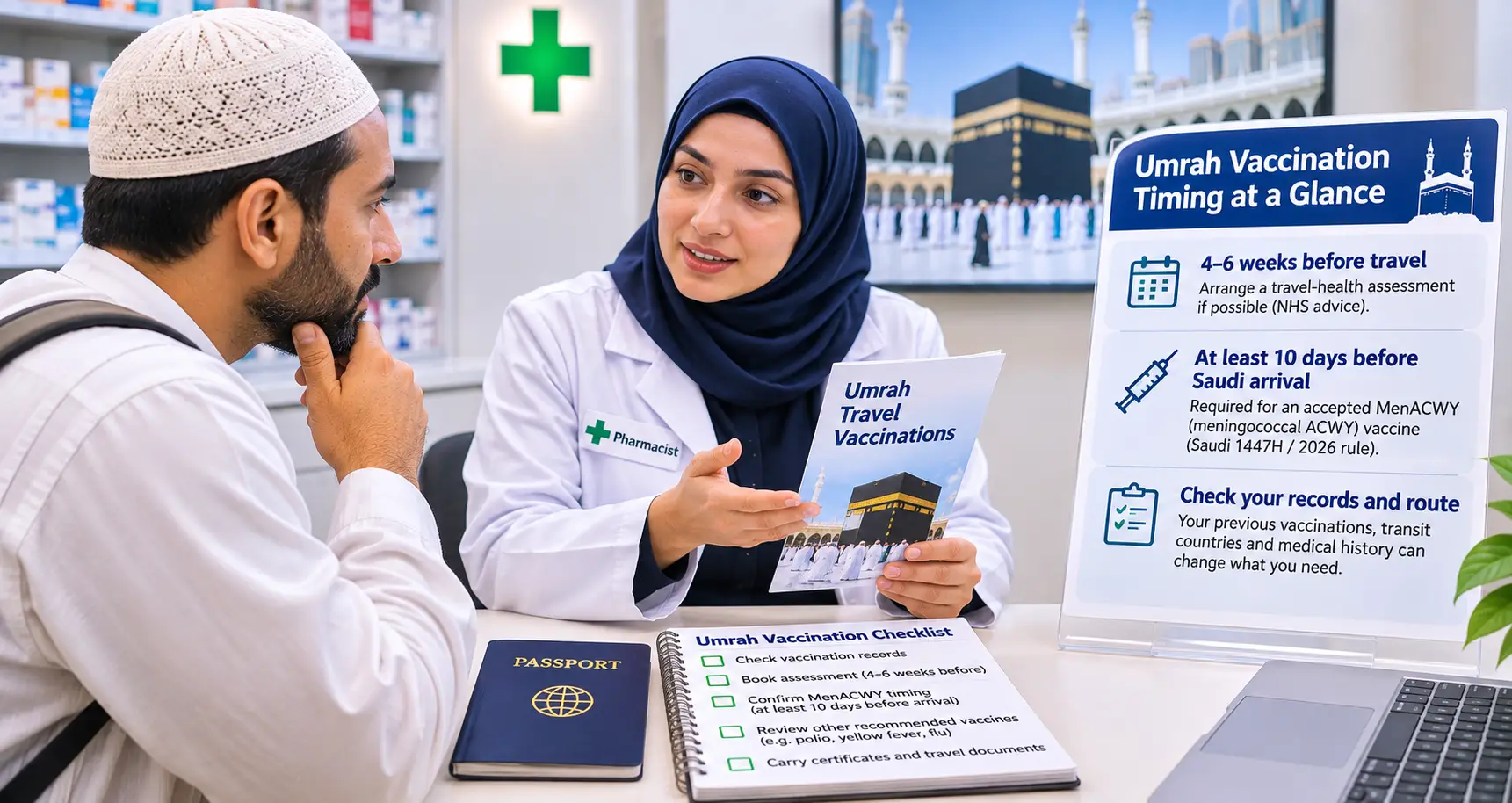
Saudi pilgrimage vaccination requirements are separate from first aid packing. The Umrah vaccination requirements for UK pilgrims guide explains the current MenACWY evidence and other route-dependent rules; check the official requirements for your exact pilgrimage and travel dates.
A Hajj vaccination checklist can also help keep certificates and routine immunisation records together before departure.
Should you carry insurance details and emergency contacts?
Yes. Keep your insurer’s emergency telephone number, accommodation details, group leader’s contact and next-of-kin information available offline. In Saudi Arabia, call 911 for an emergency ambulance according to current UK Foreign Office advice. Seek local help immediately rather than relying on self-treatment for serious symptoms.
When Should You Seek Medical Help Instead of Using a First Aid Kit?
Seek professional help for symptoms that are severe, persistent or getting worse, rather than repeatedly treating them with supplies from your kit. Chest pain, difficulty breathing, collapse, confusion, severe dehydration and suspected heatstroke all require prompt emergency assessment.
Which heat-related symptoms need emergency attention?
Confusion, seizures, loss of consciousness or a person who remains very unwell despite cooling are warning signs of potentially life-threatening heat illness. Get emergency help, move the person to a cooler place and begin cooling them while assistance is arranged.
When do diarrhoea, vomiting or fever need assessment?
Seek care if there is blood in the stool, severe abdominal pain, persistent vomiting, marked weakness, signs of dehydration or fever with concerning symptoms. Older adults, young children and people with significant long-term conditions may need advice sooner.
What if a wound or foot problem gets worse?
Spreading redness, swelling, increasing warmth, pus or severe pain can suggest infection. People with diabetes or impaired circulation should not delay assessment for a new foot wound, even if it initially looks minor.
Frequently Asked Questions About Hajj and Umrah First Aid Kits
The right medical kit for pilgrimage depends on your health and how you will travel. These answers cover common questions about carrying supplies, suitable medicines and recognising when professional help is necessary.
What should I pack in a Hajj or Umrah first aid kit?
Pack plasters, sterile dressings, blister protection, basic wound-cleaning supplies, oral rehydration sachets, suitable personal medicines, and copies of important health documents. Add any prescribed treatment and equipment you normally need.
Can I take paracetamol and regular medicines to Saudi Arabia?
Many routine personal medicines may be carried, but their ingredients and legal status should be checked before travel. Carry medicines in original packaging with supporting prescription information; some controlled medicines require prior Saudi approval.
Should I pack oral rehydration salts for Hajj?
Oral rehydration sachets are a useful item for some pilgrims, particularly when fluid is lost through diarrhoea or excessive sweating. Follow the packet directions and ask for individual advice if you have a condition that restricts fluids or salts.
Which blister plasters are useful for Tawaf and Sa’i?
Choose comfortable, well-fitting dressings that protect areas exposed to friction. Cushioned or hydrocolloid blister plasters can help with minor blisters; do not deliberately burst a blister, and seek help if there are signs of infection.
Can prescription medicines go in hand luggage?
Essential regular medicines are generally best kept accessible in hand luggage, subject to airline security rules. Carry original packaging and the documents required by the airline and Saudi authorities, with spare supplies planned sensibly for delays.
Do controlled medicines need permission for Saudi Arabia?
Certain narcotic or psychotropic medicines require advance clearance through the Saudi Food and Drug Authority’s Controlled Drugs System. Check the exact medicine and current requirements well before departure.
What should older pilgrims include in a medical kit?
Older pilgrims may need a clearly organised medication supply, medical summary, mobility-related supplies, spare glasses, and any prescribed monitoring equipment. A pre-travel review can help tailor the kit to existing conditions and walking demands.
Do I still need a first aid kit if healthcare is available during Hajj?
Yes. A small kit helps you manage minor injuries and carry regular medicines, but it does not replace clinical care. In Saudi Arabia, call 911 for emergency medical help or follow instructions from onsite health staff.
Prepare Your Travel Health Plan Before Departure
A well-organised first aid pouch helps with minor problems, but it works best alongside vaccination planning, routine medicine review and a realistic understanding of the demands of pilgrimage. The travel vaccinations for Saudi Arabia guide explains the wider destination-health considerations, while you can find a travel vaccination clinic to enquire about an appropriate pre-travel assessment.
Medical information: This guide provides general information, not a personal diagnosis or medicine recommendation. Check current Saudi entry and medicine rules and seek advice from a qualified healthcare professional about your own conditions, medicines and travel suitability.
About the Author