
About Malaria Tablets Consultation
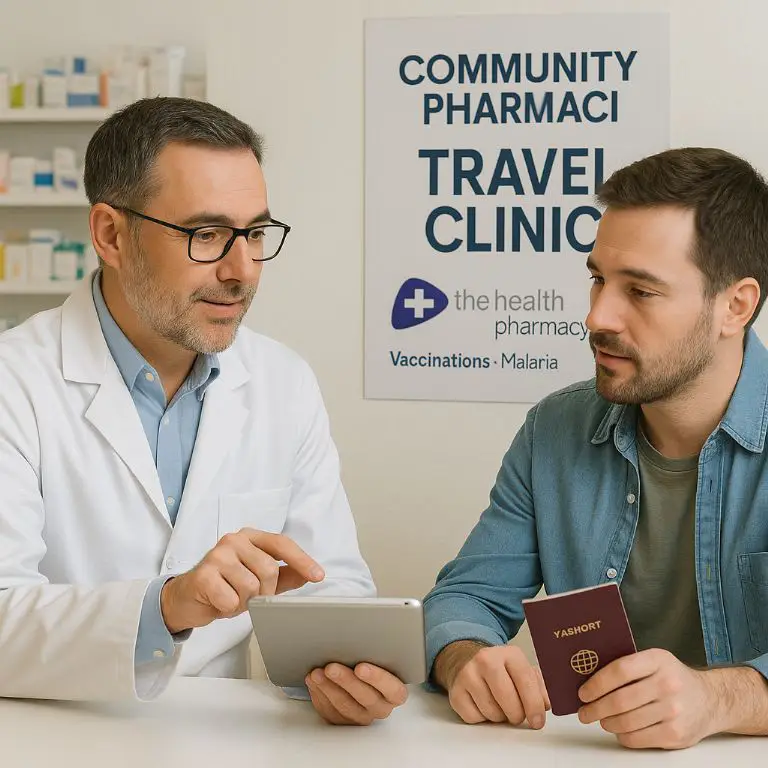
Malaria risk varies by country, region, season, itinerary and traveller. A pharmacist-led consultation checks whether malaria tablets are recommended and which option may be suitable for you.
What happens during a malaria consultation?
The pharmacist reviews your exact destinations, dates, accommodation, planned activities, medical conditions, regular medicines, allergies, pregnancy or breastfeeding status and previous experience with antimalarials. The recommendation follows current country-specific UK travel-health guidance.
The ABCD approach to malaria prevention
Awareness: understand the risk at your destination. Bite prevention: use effective repellent, suitable clothing and screened or air-conditioned accommodation. Chemoprophylaxis: take the recommended malaria tablets correctly where advised. Diagnosis: seek urgent medical help for fever during travel or after returning.
Which malaria tablets may be discussed?
Depending on destination, resistance patterns and personal suitability, options may include atovaquone/proguanil, doxycycline or mefloquine. No option is suitable for everyone, and no malaria tablet is 100% effective. The pharmacist will explain when to start, how long to continue and important cautions.
Who needs extra care?
Pregnant travellers, babies and young children, older travellers, people with complex medical conditions, weakened immunity, or an absent or poorly functioning spleen can face a higher risk of severe malaria and need individual advice.
Important points to know
Destination risk
Recommendations can differ within the same country, so bring city names, rural areas and border regions.
Your medicines
Some antimalarials interact with regular medicines or are unsuitable with particular conditions.
Bite prevention
Tablets must be combined with repellent, appropriate clothing and mosquito-net or screened accommodation.
Fever after travel
Seek urgent medical attention for fever after visiting a malaria-risk area and clearly state your travel history.
Malaria can become serious quickly
If you develop a fever or malaria-like symptoms during travel or within one year after returning, seek medical care promptly and tell the clinician exactly where you travelled.
What to bring to your appointment
Malaria Tablets Consultation FAQs
Do I need malaria tablets for every tropical country?
No. Risk can differ between countries and even between regions of the same country. Your exact itinerary and personal risk determine whether tablets are recommended.
Can I buy malaria tablets without a consultation?
A clinical assessment is important because the correct medicine depends on destination, medical history, age, pregnancy status, allergies and other medicines.
When should I start malaria tablets?
The timing depends on the medicine. Some begin shortly before entering the risk area, while others must start earlier. Follow the instructions given after your assessment.
Are malaria tablets completely effective?
No preventive medicine is 100% effective. Correct tablet use must be combined with mosquito-bite avoidance and awareness of symptoms.
Can children take malaria tablets?
Some medicines can be used for children, but suitability and dose depend on body weight, age, destination and medical history.
How soon should I book?
Book several weeks before travel where possible. Even a last-minute consultation can still provide important advice and, where appropriate, medication.
Written by the TravelJabs4U Editorial Team. Medically reviewed by Mohammed Shajan Ali, MPharm, GPhC-registered pharmacist (GPhC No. 2067785). Add the final review date before publication.
General information only. Check current TravelHealthPro malaria guidance and follow the healthcare professional who assesses you.